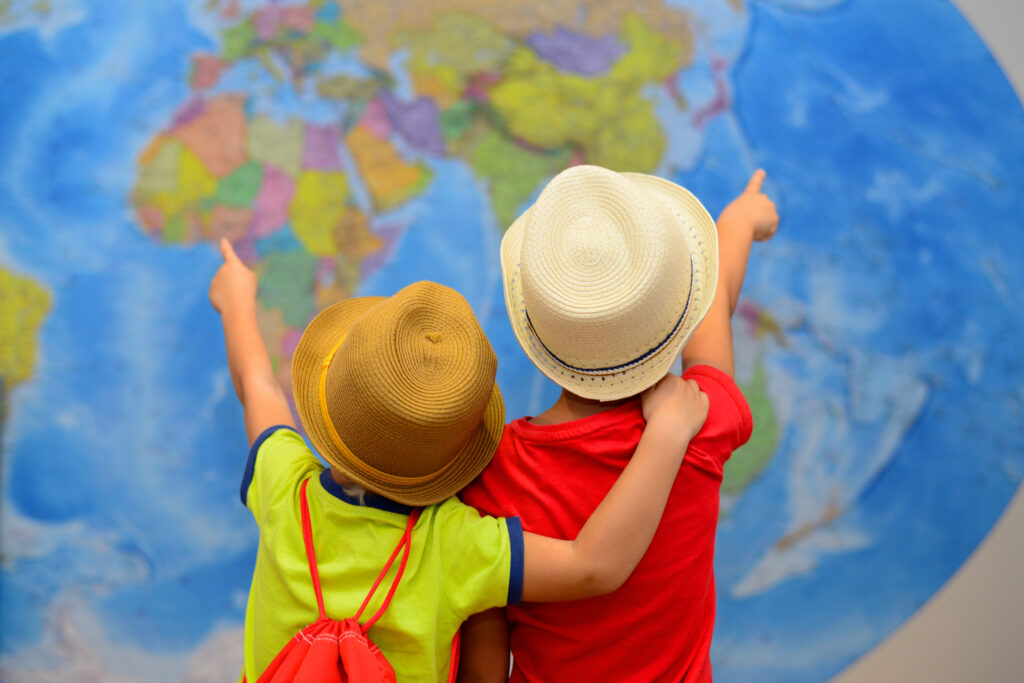
Education does not have to stop when a family leaves home. For families who enjoy traveling, worldschooling offers a way to combine academic learning with the people, places, cultures, and experiences encountered along the way.
For worldschooling for beginners, the idea can initially seem complicated. Parents may wonder how to maintain a routine, choose educational resources, handle school requirements, and keep children engaged while moving between destinations. With thoughtful preparation, however, education on the road can be adapted to suit many different family lifestyles.
What Does Education on the Road Look Like?
There is no standard worldschooling schedule.
One family might spend the morning completing mathematics and reading before visiting a museum. Another might spend several days working on a project inspired by a local ecosystem, historical site, or cultural tradition.
Travel itself can become part of the learning environment. Children can practice geography by planning routes, develop financial skills by managing a travel budget, or study languages by communicating with people in their destination.
The key is finding a balance between intentional education and natural discovery.
Begin With Your Current Situation
Before changing your children’s education, look at where your family is starting.
Ask yourself:
- What subjects need regular attention?
- How old are the children?
- Do they learn better with structure or flexibility?
- Are they currently enrolled in school?
- Will parents be working while traveling?
- How frequently do you expect to move?
- How long will you stay in each destination?
Answering these questions can help you build a realistic plan instead of copying another family’s routine.
Decide How Much Structure You Need
Some children feel comfortable with a flexible schedule, while others benefit from knowing exactly what they are expected to do each day.
A structured approach might include specific textbooks, online classes, assignments, and regular study periods.
A more flexible approach could center around projects, reading, discussions, practical activities, and children’s interests.
Many families use a combination. Core subjects can follow a consistent routine while history, science, art, geography, and cultural learning are connected to travel.
Create a Portable Learning System
One advantage of worldschooling is that educational materials can be kept relatively simple.
Instead of carrying a large collection of books and supplies, consider choosing resources that are easy to access digitally or that can be used in multiple locations.
A portable learning setup might include:
- A small selection of books
- Writing supplies
- A laptop or tablet when appropriate
- Downloaded educational materials
- Digital notebooks
- Maps and reference resources
- Art or project supplies
Having offline materials available is also useful when internet access is unreliable.
Plan Around Your Travel Pace
Travel pace can have a major effect on education.
Moving to a new destination every few days can make it difficult to establish a consistent routine. Longer stays often give children more time to settle in, build friendships, explore local resources, and develop deeper projects.
This does not mean frequent travel cannot work. It simply means families should consider how transportation days and changing environments affect their children’s energy and concentration.
If learning begins to feel rushed, slowing down may be worth considering.
Turn Destinations Into Learning Opportunities
A destination can provide educational material without requiring parents to create a formal lesson for every activity.
A historical neighborhood can support a history project. A grocery market can introduce currency, measurement, food systems, and language. A coastal environment can inspire lessons about marine ecosystems.
Children can also investigate questions that arise naturally during travel.
Why are buildings designed differently? Why does a particular region produce certain foods? How did the local community develop? What languages are spoken there?
These questions can lead to research, writing, reading, and discussion.
Keep Core Academics Consistent
Experiential learning is valuable, but many families still want to maintain regular practice in foundational subjects.
Reading, writing, and mathematics can often be incorporated into a relatively predictable routine.
For example, children might read independently each morning, complete mathematics activities several times a week, and maintain a journal throughout the trip.
This creates continuity while leaving room for travel-based learning.
Use Projects to Connect Different Subjects
Project-based learning can be particularly practical for traveling families because one project can incorporate several areas of education.
Suppose a child becomes interested in a country’s wildlife. They could research native species, read related books, calculate population statistics, create drawings, write a report, and visit a relevant conservation center.
A project about local architecture could combine history, geometry, art, research, and photography.
This approach can make learning feel connected rather than divided into isolated school subjects.
Encourage Children to Document Their Experiences
A travel journal can become both a creative outlet and an educational record.
Children can write about places they visit, draw pictures, collect observations, create maps, or record questions they want to investigate.
Older children might create digital presentations, photography projects, videos, or longer research papers.
Documentation also gives parents a way to see what children are learning over time.
Make Social Learning Part of the Plan
Traveling families should consider social opportunities alongside academic plans.
Children can meet peers through sports, classes, workshops, cultural activities, community events, libraries, and groups for traveling or homeschooling families.
Longer stays can make it easier to develop meaningful friendships because children have repeated opportunities to interact with the same people.
Social experiences can also expose children to different perspectives and communication styles.
Manage the Practical Details
Worldschooling involves more than lessons and sightseeing.
Parents may need to organize accommodation, transportation, travel documents, finances, healthcare, connectivity, and work schedules.
If you plan to stay in one destination for an extended period, consider whether the accommodation provides enough space for both studying and relaxing.
Internet access may also matter if your family relies on online classes or digital educational resources.
Creating a basic checklist before each move can make transitions smoother.
Research Education Requirements
Families should understand the educational regulations that apply to them before beginning a worldschooling lifestyle.
Requirements can vary based on where a family lives and the circumstances of the children. Parents may need to research homeschooling rules, registration requirements, assessments, attendance expectations, and record-keeping.
Families transitioning from traditional schools should also consider how they will manage existing academic records and any future return to formal education.
Doing this research early can help prevent avoidable administrative issues.
Build a Budget for Learning and Travel
Travel costs can quickly become a significant part of the worldschooling equation.
Create a realistic budget that considers accommodation, transportation, food, activities, educational resources, insurance, and unexpected expenses.
You may also want to decide which activities are essential and which can be replaced by lower-cost alternatives.
Public libraries, parks, free museums, walking tours, community events, and local cultural spaces can provide meaningful learning experiences without requiring expensive admission fees.
Allow Time for Rest
Not every day needs to be educationally ambitious.
Travel can be tiring, particularly for younger children. Frequent sightseeing, long transportation days, and unfamiliar environments can affect concentration.
Schedule quieter periods where children can read, play, rest, or simply explore their surroundings at a slower pace.
Rest is not wasted time. It can help the entire family maintain a sustainable rhythm.
Learn From What Works
Your first version of worldschooling does not need to be perfect.
After several weeks, review your routine and ask practical questions.
Are the children completing their work comfortably? Is there too much structure? Are travel days causing problems? Are the children getting enough social time? Do they have enough opportunities to pursue their interests?
Use the answers to make adjustments.
A successful routine may look very different after a few months than it did when you first started.
A Simple Starting Framework
For families who feel overwhelmed by the number of decisions involved, begin with four basic elements:
Education: Identify the subjects and skills that need regular attention.
Travel: Choose a manageable destination and realistic pace.
Routine: Establish a simple schedule that can survive changes in location.
Exploration: Look for natural learning opportunities wherever you go.
Once these foundations are working, you can add more sophisticated curricula, projects, activities, or destinations.
Final Thoughts
Worldschooling can give traveling families an opportunity to approach education in a flexible and experience-driven way. The road can become a classroom, but making the lifestyle work requires more than simply traveling with children.
Start with your family’s educational needs, create a practical routine, choose a travel pace that leaves room for stability, and use destinations as opportunities for discovery.
Most importantly, allow your approach to develop over time. Education on the road does not have to look exactly like school at home. With thoughtful planning and flexibility, families can create a learning experience that fits the way they want to live and travel.