Repetitive part production requires equipment that can maintain consistent quality while producing components at an efficient rate. Manual intervention, frequent adjustments, and repeated setups can increase production time and create unwanted variation between parts.
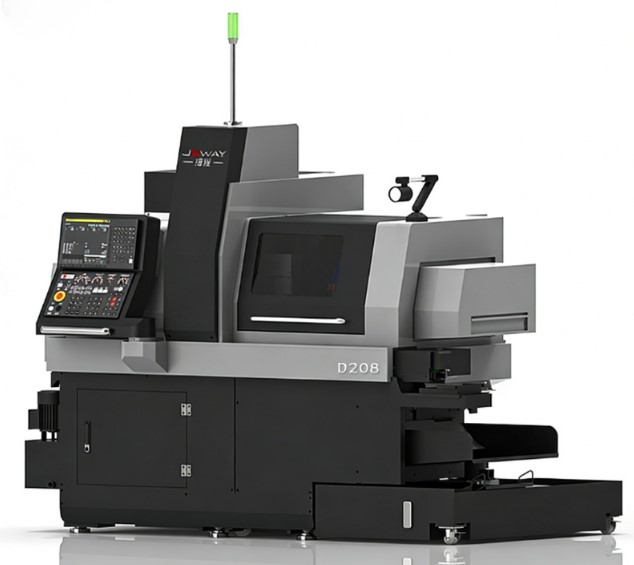
A swiss type automatic lathe machine combines automated material feeding, programmed machining movements, and specialized tooling to support continuous production. These capabilities make Swiss-type equipment particularly useful when manufacturers need to produce large quantities of small precision components with consistent dimensions.
Automated Production Reduces Manual Work
Automation represents one of the main reasons Swiss-type machines suit repetitive manufacturing. Once the machine receives the appropriate program, tooling, and material setup, it can repeat the machining sequence across a production batch.
The operator can focus on tasks such as inspection, tool monitoring, material management, and process adjustments rather than manually performing every machining step.
This approach helps create a more consistent workflow for repeated components.
Consistent Machining Across Production Runs
Repetitive parts require reliable dimensional consistency. Small variations in tool position or workpiece alignment can affect the quality of precision components.
CNC control allows the machine to follow programmed tool paths for each production cycle. Proper setup and regular inspection help maintain consistent results throughout the batch.
Stable machining conditions also reduce the need for frequent manual corrections.
Guide Bushing Supports Small Components
Swiss-type machines use guide bushing systems to support material close to the cutting zone. This feature proves valuable when machining narrow or slender components.
Close material support helps limit deflection caused by cutting forces. It can also reduce vibration and contribute to more predictable dimensional results.
The benefit becomes especially important when manufacturers produce long, small-diameter parts in large quantities.
Multiple Operations In One Cycle
Repetitive components often require several machining operations. A typical part may need turning, drilling, threading, grooving, or milling before completion.
Swiss-type machines can combine many of these operations within one programmed cycle, depending on their configuration.
Completing more operations in one cycle reduces transfers between machines and helps simplify repetitive production.
Live Tooling Adds Flexibility
Live tooling allows rotating tools to perform operations beyond conventional turning. Manufacturers can use suitable live tooling arrangements for features such as cross holes, slots, flats, and milling.
This capability reduces the need for separate machines for certain secondary operations.
For repetitive parts, eliminating additional processing stages can save time across the entire production batch.
Bar Feeding Supports Continuous Production
Automatic bar feeding allows raw material to enter the machining area without requiring constant manual loading. This feature supports longer unattended or lightly attended production periods.
The exact level of automation depends on the machine and production setup. Manufacturers should match the bar feeder with the required material diameter and production volume.
Continuous material supply helps maintain a steady production rhythm.
Reduce Setup Requirements
Repeated setups consume valuable production time. They also create opportunities for positioning errors and require operators to repeat preparation procedures.
Swiss-type machining allows several operations to take place without removing the workpiece from the primary machining environment.
A well-planned setup can therefore support the production of many components before operators need to make significant changes.
Improve Production Throughput
Throughput refers to the number of finished components produced during a specific period. Faster machining cycles and reduced handling can increase overall output.
Swiss-type machines support high-volume production by combining automation with multiple machining capabilities.
Manufacturers should evaluate complete cycle time rather than focusing only on spindle speed. Tool changes, material feeding, part transfer, and chip removal also affect throughput.
Reduce Secondary Processing
Secondary processing can add considerable time to repetitive production. Moving parts between machines requires additional handling, setup, inspection, and scheduling.
A Swiss-type machine with suitable tooling can complete many secondary features during the primary machining cycle.
This consolidation can shorten the overall production route and reduce the number of stages required for each component.
Improve Labor Efficiency
Automation does not remove the need for skilled workers. Instead, it changes how operators spend their time.
One operator may monitor production, inspect finished components, manage tools, and oversee material supply while the machine performs repetitive cutting operations.
This can improve labor efficiency, particularly when manufacturers produce large batches of similar parts.
Control Tool Wear More Effectively
Tool wear becomes important during long production runs. A worn tool can gradually affect dimensions and surface finish if operators do not monitor its condition.
Modern CNC machining processes can use tool-life management and scheduled tool changes to help maintain production consistency.
Manufacturers should establish inspection procedures and replacement intervals according to material, tooling, cutting conditions, and production volume.
Suitable Materials For Repetitive Parts
Swiss-type machines can process various materials when the machine configuration and cutting tools match the application. Common materials include:
- Stainless steel
- Aluminum
- Brass
- Titanium
- Engineering plastics
- Other machinable alloys
Each material requires appropriate cutting speeds, feeds, tooling, and chip-control strategies.
Where Repetitive Swiss Machining Works Well
Swiss-type automatic machining suits industries that require large quantities of small precision components. Common applications include medical components, electronic parts, automotive components, instrumentation parts, and other miniature products.
The specific machine configuration should match the component’s dimensions, tolerances, material, and required machining features.
What To Check Before Choosing A Machine
Manufacturers should evaluate more than automatic operation when selecting equipment for repetitive production.
Key factors include:
- Maximum bar capacity
- Guide bushing configuration
- Number of machining axes
- Tool capacity
- Live tooling options
- Main and sub-spindle capabilities
- Spindle speed and power
- Bar feeder compatibility
- CNC control features
- Machine repeatability
These specifications help determine whether the equipment can support the required production volume and part complexity.
How JSWAY Supports Repetitive Precision Machining
JSWAY provides Swiss-type CNC machining solutions designed for precision production applications. Its equipment can support manufacturers that need automated machining, high-speed operation, and efficient processing of small components.
When considering JSWAY equipment, manufacturers should compare the available machine configuration with their expected part sizes, materials, tolerances, cycle times, and production quantities.
Balance Automation With Production Requirements
Automation provides the greatest value when production volume justifies the investment. A manufacturer producing a few unique components may not require the same level of automation as a facility producing thousands of identical parts.
Consider the expected order volume, machine utilization, labor costs, material handling requirements, and desired production schedule.
This assessment helps manufacturers choose automation features that deliver practical value rather than unnecessary complexity.
Build A Reliable Repetitive Production Process
A Swiss-type automatic lathe suits repetitive parts because it combines CNC control, automated material handling, stable workpiece support, multi-operation machining, and efficient tooling.
These capabilities help manufacturers produce repeated components with consistent processes while reducing manual handling and unnecessary secondary operations.
JSWAY offers Swiss-type CNC solutions that manufacturers can evaluate for demanding repetitive production. Matching the machine configuration to part geometry, material, tolerance, and production volume can help create an efficient and dependable machining workflow.