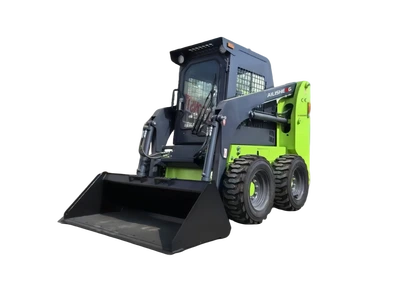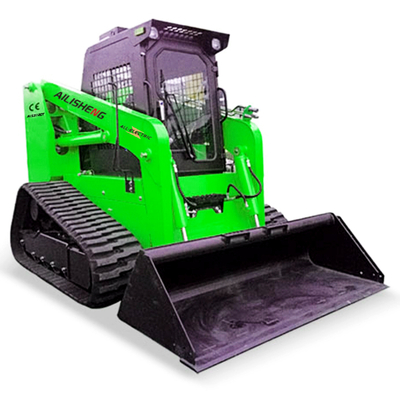
Electric skid steer loaders are used across construction, landscaping, agriculture, warehousing, and material-handling operations. However, different businesses often require different machine configurations to meet their working conditions, productivity targets, and budget requirements. Original equipment manufacturer (OEM) services and customization options allow buyers to explore equipment solutions that better match their operational needs.
For importers, equipment distributors, rental companies, and large contractors, understanding available customization options is an important part of the purchasing process. Working with an experienced Electric Skid Steer Loaders Manufacturer can help buyers discuss machine specifications, branding requirements, attachments, battery configurations, and other options before placing an order. The availability of these services varies by manufacturer, so buyers should confirm which modifications are supported and whether they affect cost, delivery time, warranty, or compliance requirements.
What Does OEM Mean in Electric Skid Steer Loaders?
OEM stands for original equipment manufacturer. In the construction equipment industry, the term can refer to a company that produces equipment or components for sale under its own brand or, under an agreed business arrangement, for another company’s brand.
For electric skid steer loaders, OEM arrangements may involve supplying complete machines, producing equipment to agreed specifications, or providing approved branding and configuration options. The exact scope depends on the manufacturer’s production capabilities and the commercial agreement.
OEM services are particularly relevant to businesses that sell machinery under their own brand, develop a private-label product range, or source equipment for specific markets.
Common OEM arrangements may include:
- Supplying machines under an agreed brand name.
- Applying approved logos and product labels.
- Using specified colors and exterior finishes.
- Providing agreed technical configurations.
- Preparing packaging and documentation for a target market.
- Coordinating quality requirements and product inspections.
Not every manufacturer offers all these services. Buyers should request written confirmation of available options, minimum order quantities, intellectual property responsibilities, and production requirements before entering an OEM agreement.
1. Private-Label Branding and Logo Customization
Branding is one of the most common customization requests from distributors and equipment businesses. A company may want its logo, brand colors, and product identification displayed consistently across its machinery range.
Depending on the manufacturer’s capabilities, branding options may include:
- Company logos on approved exterior panels.
- Custom decals and model identification.
- Brand-specific color schemes.
- Nameplates and product labels.
- Customized manuals, packaging, or promotional materials.
Private-label branding can help distributors maintain a consistent market identity and differentiate their equipment offerings. It can also support businesses that already have established customer relationships and want to expand into electric construction machinery.
However, branding should not obscure required safety warnings, serial numbers, manufacturer identification, or regulatory markings. Buyers should clarify which information must remain visible and who is responsible for ensuring that labels and documentation comply with the destination market’s requirements.
2. Battery Capacity and Charging Configuration
Battery performance is a central consideration when customizing an electric skid steer loader. Different applications place different demands on the machine, so buyers should discuss their typical operating hours, workload, charging opportunities, and working environment.
Potential configuration options, where supported, may include different battery capacities, compatible charging equipment, or charging arrangements suited to the intended site.
For example, a warehouse operator with predictable shifts and overnight charging may have different requirements from a contractor working extended hours at a construction site. A larger battery may increase available operating time, but it can also affect machine weight, cost, charging requirements, and overall design.
Before requesting battery customization, buyers should establish:
- The expected number of operating hours per shift.
- The intensity and type of work performed.
- Whether the machine will use energy-intensive attachments.
- Available electrical supply and charging infrastructure.
- Typical ambient temperatures.
- Battery warranty and expected service life.
Battery changes should be approved by the manufacturer because they can affect electrical protection, cooling, weight distribution, charging controls, and machine safety. Buyers should avoid unauthorized battery replacements or modifications that may compromise the equipment’s performance or warranty.
3. Motor and Hydraulic Performance Options
Electric skid steer loaders depend on their drive systems and hydraulics to move, lift, and operate attachments. Some manufacturers may offer different machine models or approved configurations with varying motor output, hydraulic flow, or operating capacity.
The right choice depends on the work being performed rather than on selecting the highest available specification.
For instance, a business handling light materials in a warehouse may prioritize compact dimensions and precise maneuverability. A contractor using hydraulic attachments may place greater emphasis on auxiliary hydraulic performance and continuous-duty capability.
Important specifications to discuss include:
| Specification | Why it matters |
|---|---|
| Drive motor output | Influences traction and machine movement under load |
| Hydraulic flow rate | Affects compatibility with hydraulic attachments |
| Hydraulic pressure | Helps determine whether an attachment can operate within its requirements |
| Rated operating capacity | Indicates the machine’s specified working-load capability |
| Travel speed | Influences movement efficiency across the worksite |
| Operating weight | Affects transport, ground pressure, and access limitations |
Not all specifications are independently adjustable. Many are determined by the machine’s design and approved model configuration. Buyers should obtain a model-specific technical datasheet and confirm that the complete machine can safely support the intended workload.
4. Attachment Compatibility and Versatility
One of the major advantages of skid steer loaders is their ability to work with different attachments. The correct attachment can help a single machine perform multiple tasks, reducing the need for separate equipment.
Depending on the machine’s mounting system and hydraulic capabilities, potential attachments may include:
- General-purpose buckets.
- Pallet forks.
- Grapples.
- Augers.
- Trenchers.
- Snow removal equipment.
- Sweepers.
- Specialized material-handling tools.
When discussing customization, buyers should confirm attachment mounting compatibility, hydraulic connections, electrical interfaces where applicable, and the manufacturer’s rated operating limits.
An attachment that physically connects to the loader is not necessarily compatible with its hydraulic flow, pressure, or lifting capacity. High-demand attachments may require specific hydraulic performance or additional approved features.
For fleet operators, standardizing attachment interfaces across machines can simplify training, storage, maintenance, and replacement planning. However, compatibility should always be verified against the exact machine model and attachment specification.
5. Machine Dimensions and Operator Comfort
Worksite conditions can influence the ideal dimensions and layout of an electric skid steer loader. Indoor facilities may have narrow aisles, low doorways, or restricted turning areas, while outdoor construction sites may prioritize stability and ground clearance.
Some manufacturers may offer different models or approved configurations to address these requirements. Buyers should examine overall machine width, height, length, turning behavior, operating weight, and access to maintenance points.
Operator comfort also matters because it can affect fatigue and productivity during long shifts. Depending on the model, available features may include different seat arrangements, control layouts, display options, visibility improvements, or protective enclosures.
When evaluating operator-focused options, consider:
- Ease of entry and exit.
- Visibility around the attachment and working area.
- Control responsiveness and ergonomics.
- Display readability in different lighting conditions.
- Protection from dust, debris, and weather.
- Access to emergency controls and safety features.
Structural or safety-critical modifications should only be undertaken through approved engineering and manufacturing processes. Buyers should not assume that a manufacturer can safely change the chassis, protective structures, or operator compartment simply because a custom request has been made.
6. Color, Finish, and Exterior Design
Custom colors and finishes can help equipment businesses maintain a consistent product identity. Construction contractors may also want machines that match their existing fleet, while rental companies may use distinctive colors to identify equipment.
Available options may include standard alternative colors, approved paint finishes, branded exterior panels, or custom decals. The feasibility of these options depends on the manufacturer’s production process and order volume.
Buyers should ask whether a custom finish affects the minimum order quantity, production schedule, cost, and spare-panel availability. They should also confirm whether the finish is appropriate for the machine’s operating environment and expected exposure to abrasion, moisture, and cleaning products.
Although exterior appearance can be commercially important, it should remain secondary to structural quality, component reliability, safety, and serviceability.
7. Control Systems and Display Options
Electronic controls are an important part of electric construction equipment. Depending on the model, the operator interface may display battery state of charge, warning indicators, operating information, and diagnostic messages.
Some manufacturers may support approved control or display configurations to meet particular operator preferences or market requirements. Buyers should confirm exactly what can be changed and whether software configuration, additional hardware, or specialized service support is required.
Useful questions include:
- What information is displayed during operation?
- Are battery and fault indicators easy to understand?
- Can operating parameters be configured by authorized technicians?
- Are diagnostic tools available to service providers?
- Are software updates included or charged separately?
- Can the interface support the language required by the target market?
Control-system customization must not disable safety functions or introduce unverified software changes. Buyers should prioritize documented functionality and ensure that any configuration remains supported by the manufacturer.
8. Documentation and Market-Specific Requirements
Equipment sold across international markets may need different documentation, labels, electrical information, or compliance assessments. OEM arrangements can sometimes include documentation prepared for a distributor or target market, but the scope of this support must be confirmed.
Depending on the destination and sales arrangement, buyers may need operator manuals, maintenance instructions, spare-parts lists, technical datasheets, warranty documents, shipping records, and applicable conformity documentation.
Before ordering, clarify:
- Which manuals and technical documents are supplied?
- Are the documents available in the required language?
- Which safety labels must appear on the machine?
- What product testing or conformity evidence is available?
- Who is responsible for destination-market compliance?
- Are serial numbers and product identification handled according to applicable requirements?
Buyers should not assume that a machine meets every country’s requirements simply because it is manufactured for export. Compliance obligations depend on the destination, equipment category, intended use, and applicable regulations.
9. Minimum Order Quantities, Costs, and Lead Times
Customization can increase production complexity. A standard machine may be available from existing inventory, while a branded or specially configured order may require additional planning, materials, engineering review, or assembly work.
For this reason, OEM and customization agreements often involve minimum order quantities or longer lead times. The specific requirements vary by manufacturer and by the type of modification requested.
Before approving a customized order, request an itemized quotation that separates the base machine price from additional costs.
| Cost factor | Questions to ask |
|---|---|
| Base machine | Which model and standard features are included? |
| Branding | Are logos, decals, and custom colors charged separately? |
| Technical options | What is the price of each approved configuration? |
| Engineering | Are design, testing, or approval fees required? |
| Minimum quantity | Does the quotation depend on ordering multiple units? |
| Production time | How long will manufacturing and inspection take? |
| Shipping | Are packaging, freight, and insurance included? |
| Spare parts | Are recommended service parts available with the order? |
Buyers should also ask whether changes made after production approval will result in extra costs or delays. Finalizing specifications before manufacturing begins can reduce misunderstandings and help keep the project on schedule.
10. Quality Control for Customized Electric Skid Steer Loaders
Customization should not come at the expense of quality. A machine with the correct logo or battery configuration still needs to meet the agreed technical specifications and pass appropriate inspections.
Buyers should ask how the manufacturer verifies customized equipment and whether the final machine will be checked against the purchase agreement.
A practical quality-control process may include:
- Reviewing the approved technical specification.
- Checking battery and charging-system information.
- Inspecting structural components and assembly quality.
- Testing drive and hydraulic functions.
- Confirming attachment compatibility.
- Verifying required labels and documentation.
- Recording machine identification and inspection results.
- Checking the supplied accessories and spare parts.
For significant orders, buyers may consider an independent pre-shipment inspection. The inspection scope should be agreed in advance and should cover the specific requirements that matter to the buyer.
It is also advisable to request written confirmation that customized components and configurations are covered by the applicable warranty.
11. How to Choose the Right OEM Manufacturing Partner
Selecting an OEM partner requires evaluating more than its willingness to accept customization requests. Buyers need to determine whether the company can deliver the agreed configuration consistently and support the equipment after delivery.
Start by identifying your business requirements. A distributor launching a private-label product range may focus on branding, repeat-order consistency, and documentation. A contractor may prioritize battery runtime, hydraulic performance, and attachment compatibility.
Next, evaluate the manufacturer’s technical capabilities. Request model-specific specifications, details about available options, quality-control procedures, and examples of comparable configurations where available.
It is also important to assess communication and commercial reliability. A capable partner should be able to explain technical limitations, provide clear quotations, identify realistic production timelines, and document the agreed requirements.
Before signing an OEM agreement, review the following:
- Production capability: Can the manufacturer supply the required number of machines?
- Customization scope: Are the requested options supported and documented?
- Quality consistency: Are inspection and testing procedures clearly defined?
- Branding rights: Are logo use, ownership, and design approvals covered by the agreement?
- Warranty responsibility: Who handles claims involving customized components?
- Parts support: Will replacement components remain available?
- Delivery commitments: Are production and shipping schedules stated in writing?
- Compliance: Are responsibilities for market-specific requirements clearly assigned?
A carefully documented agreement helps protect both parties and establishes a clear basis for evaluating the finished equipment.
Conclusion
OEM and customization options allow buyers to align electric skid steer loaders with their branding, operational requirements, attachment needs, and target markets. Depending on the manufacturer’s capabilities, these options may include private-label branding, battery configurations, approved hydraulic specifications, operator interface choices, exterior finishes, and market-specific documentation.
However, customization is not simply a matter of selecting additional features. Changes can affect production costs, delivery schedules, safety, warranty coverage, and regulatory responsibilities. Buyers should therefore confirm technical feasibility and obtain written approval before committing to a configuration.
By evaluating manufacturing capabilities, quality-control procedures, minimum order requirements, documentation, and after-sales support, businesses can make more informed OEM purchasing decisions. The most suitable manufacturing partner is one that can deliver the agreed specifications consistently while providing clear communication and dependable long-term equipment support.