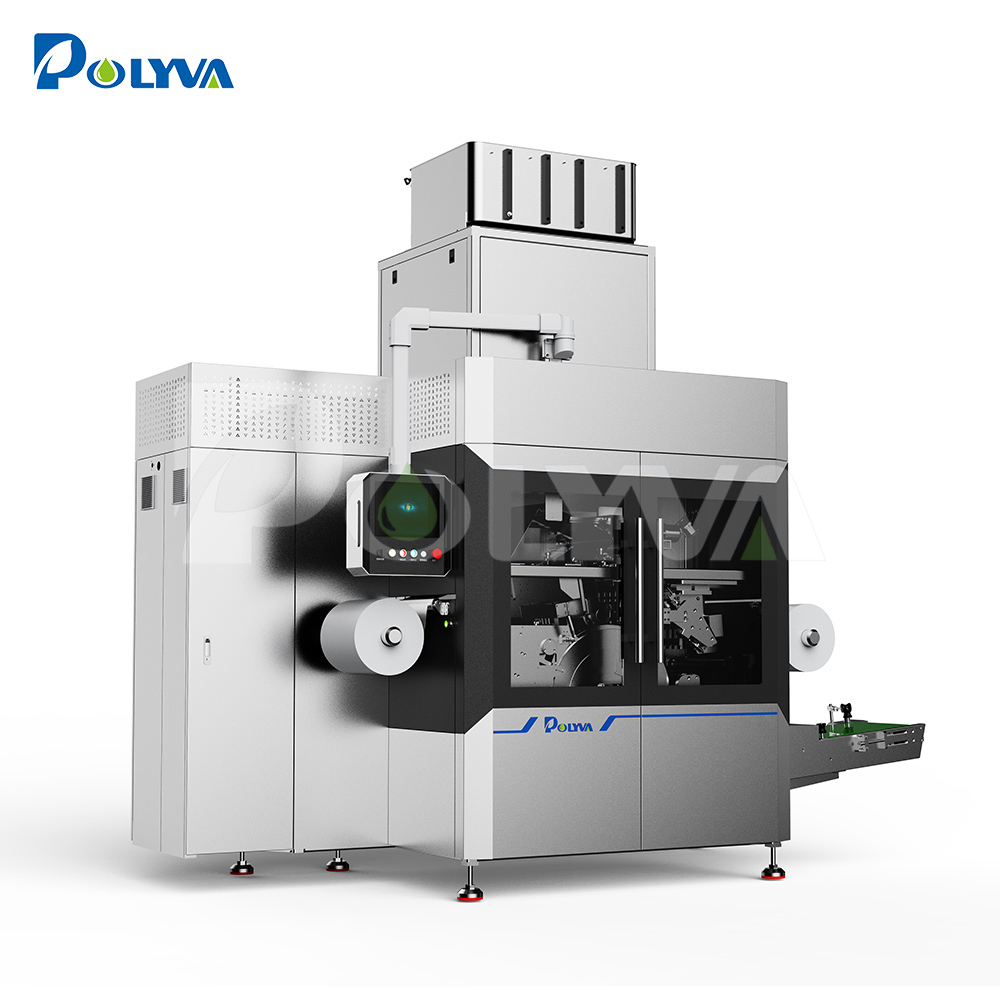
Production speed is an important consideration when selecting packaging equipment, but the maximum cycle rate of a machine does not always represent its practical output. Water-soluble film, product characteristics, pouch design, filling requirements, and machine settings can all influence how quickly a packaging line can operate.
A Water Soluble Film Packaging Machine must coordinate film feeding, forming, dosing, sealing, and cutting at the selected production rate. POLYVA is one manufacturer providing equipment for water-soluble film packaging applications where these factors need to be considered together.
Film Characteristics
The properties of the water-soluble film can affect how quickly it can be processed. Film thickness, strength, flexibility, and sensitivity to humidity may influence forming and sealing performance.
A machine operating too quickly for the selected film may experience alignment problems, inconsistent forming, or sealing variations. Film specifications should therefore be considered when establishing the practical production speed.
Product Type and Viscosity
The physical properties of the product being packaged can have a significant effect on cycle speed. Low-viscosity liquids may flow differently from thick gels or other viscous formulations.
Powders can introduce another set of considerations because their density and flowability affect dosing speed. The filling system must deliver the required quantity without creating spills or interfering with the sealing process.
Pouch Size and Format
Larger pouches generally require more product and may involve longer filling or forming cycles. Smaller single-dose formats can potentially support faster cycles when the machine and product are appropriately configured.
Multi-compartment pouches can also require additional forming and dosing steps. Consequently, the number of compartments and overall pouch design should be considered when evaluating production capacity.
Filling System
The filling stage can become a limiting factor when operating at high speeds. Pumps, valves, augers, and other dosing mechanisms each have practical operating ranges.
Increasing the machine speed without ensuring that the dosing system can keep up may lead to inconsistent filling. The target cycle rate should allow sufficient time for accurate product delivery.
Sealing Requirements
Sealing is another major factor that influences production speed. The film needs adequate contact time and appropriate temperature and pressure to produce a reliable seal.
If a particular film requires longer sealing conditions, the machine may need to operate at a lower rate to maintain consistent package quality. Increasing speed may require corresponding adjustments to other sealing parameters.
Machine Configuration
Machine architecture can affect practical output. The number of lanes, forming stations, filling heads, and sealing areas can influence how many pouches are produced during each cycle.
A multi-lane configuration may increase overall output without requiring every individual process to operate at an excessively high speed.
Film Feeding and Alignment
Fast production requires stable film movement. As machine speed increases, maintaining accurate film tension and alignment becomes increasingly important.
Automated guides and sensors can help keep the film correctly positioned. Poor alignment can lead to package defects and production stoppages, reducing actual output even if the nominal machine speed is high.
Environmental Conditions
Humidity and temperature can influence water-soluble film behavior. Changes in environmental conditions may affect handling, forming, and sealing.
If film performance becomes less predictable under certain conditions, operators may need to adjust production parameters. Maintaining an environment suitable for the selected film can support more stable operating speeds.
Machine Settings
Production speed is closely connected to other machine parameters. Operators may need to balance:
- Film feeding speed
- Filling timing
- Forming conditions
- Sealing temperature
- Sealing pressure
- Dwell time
- Cutting and transfer timing
Changing one parameter can affect another part of the process. For this reason, speed adjustments should be evaluated alongside overall package quality.
Automation and Control Systems
Automated controls can help coordinate different machine functions during continuous production. Sensors may monitor film position, filling status, machine cycles, and other operating conditions.
When a machine detects an abnormal condition, alarms can alert operators so that corrective action can be taken. This can help reduce interruptions that would otherwise lower effective production output.
Maintenance and Component Condition
Machine condition also affects operating speed. Worn rollers, forming components, sealing parts, sensors, or dosing components can cause inconsistent operation.
Regular inspection and preventive maintenance can help keep equipment within its intended operating range. A well-maintained machine is better positioned to maintain stable production over extended runs.
Balancing Speed With Quality
The fastest possible cycle is not necessarily the most effective production setting. If excessive speed causes filling errors, weak seals, film damage, or frequent stoppages, overall output can decline.
Manufacturers should therefore evaluate effective production rate alongside package quality, material usage, downtime, and changeover requirements.
How to Determine Practical Production Speed
A suitable production speed should be established through testing with the actual product, film, and pouch configuration. Trial runs can help identify the point at which output and package quality remain stable.
Production teams can then monitor filling accuracy, seal integrity, pouch dimensions, film alignment, and machine downtime to determine whether the selected speed is sustainable.
Conclusion
The speed of a water-soluble film packaging machine depends on much more than its rated cycle rate. Film characteristics, product viscosity, pouch format, filling technology, sealing requirements, machine configuration, environmental conditions, and maintenance can all affect practical production capacity.
By balancing these factors rather than focusing solely on maximum speed, manufacturers can establish operating conditions that support consistent packaging quality and efficient production over longer runs.