Selecting the right mixing equipment is an important decision for foundries that rely on green sand molding. The mixer must provide consistent conditioning while handling the required materials, batch sizes, and production cycles. The right choice can support stable mold properties and reduce avoidable production issues.
When comparing Intensive Green Sand Mixers, foundries should consider more than basic capacity and purchase cost. Mixing performance, material compatibility, moisture control, wear resistance, maintenance requirements, and integration with the existing sand preparation system all deserve careful attention.
Understand Your Green Sand Requirements
Before selecting a mixer, start by analyzing the composition of the molding sand. Green sand commonly contains foundry sand, clay or bentonite, water, and various additives.
The proportions and characteristics of these materials can vary significantly between foundries. Reclaimed sand may also be incorporated into the mixture, making it important to understand the condition of the material entering the mixer.
Knowing the formulation helps determine the mixing intensity and equipment configuration required.
Determine the Required Production Capacity
Mixer capacity should correspond to the amount of sand required by the molding line. A mixer that is too small may create production bottlenecks, while an oversized system can increase unnecessary equipment and energy costs.
Consider both batch capacity and cycle time when estimating output. The mixer should be able to prepare enough conditioned sand to keep downstream molding equipment supplied.
Expected future production should also be considered if the foundry plans to expand.
Evaluate Mixing Quality
Mixing quality is one of the most important factors when selecting equipment. Green sand needs consistent moisture, binder distribution, and additive dispersion to provide predictable molding properties.
An effective intensive mixer should create sufficient mechanical action to distribute these components throughout the sand. Consistent mixing can help control properties such as mold strength, compactability, and permeability.
Foundries should evaluate whether the mixer can achieve the required level of uniformity within a practical cycle time.
Consider Moisture Control
Moisture has a major influence on green sand performance. Too much or too little water can change the molding characteristics and affect casting quality.
The mixer should allow water to be introduced and distributed consistently. Where automated dosing is available, it can help improve repeatability by controlling the amount of water added to each batch.
Moisture measurement and feedback systems may also be useful in applications requiring tighter process control.
Check Compatibility with Reclaimed Sand
Many foundries reuse molding sand to reduce material consumption and waste. Reclaimed sand can have different moisture levels and residual binder characteristics compared with new sand.
The selected mixer should be capable of handling the expected combination of new and reclaimed materials. Its mixing action should provide effective conditioning without creating excessive wear or unnecessary energy consumption.
Understanding the reclamation process can therefore help determine the most suitable mixer configuration.
Examine Mixer Construction and Wear Resistance
Foundry sand is abrasive, so internal mixer components are exposed to significant wear. The construction materials used for mixing tools, liners, and other contact surfaces can influence equipment service life.
When comparing mixers, pay attention to the durability of wear-prone components and how easily they can be inspected or replaced.
A practical design should make routine maintenance manageable while minimizing unnecessary downtime.
Review Mixing Tool Design
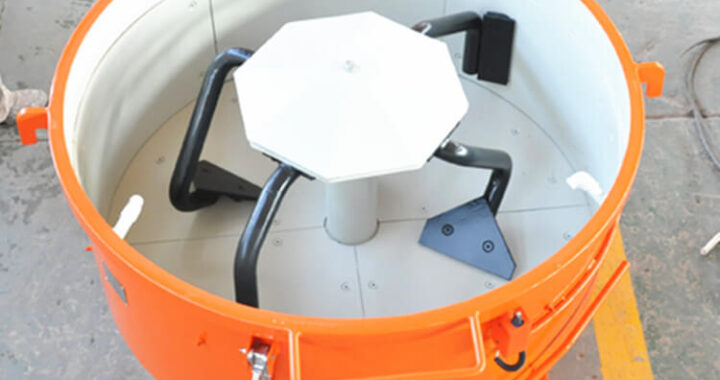
The arrangement and design of the mixing tools influence how sand moves inside the mixer. Effective tools should promote circulation and conditioning throughout the batch rather than allowing material to remain in inactive areas.
Different sand formulations may also respond differently to mixing intensity. The equipment should therefore be evaluated according to the actual materials being processed rather than relying solely on general specifications.
Evaluate Automation Features
Automation can make green sand preparation more consistent by controlling key process variables. Depending on the system, automated functions may include material dosing, water addition, mixing time, and discharge.
A suitable control system can reduce dependence on manual adjustments and make production parameters easier to repeat.
For larger foundries, integration with sand preparation, reclamation, and molding equipment may also be an important consideration.
Consider Discharge and Material Flow
The mixer should discharge conditioned sand efficiently so that the mixing cycle does not become a bottleneck. Residual material inside the mixer can also affect batch consistency, particularly when different formulations are processed.
Evaluate how the discharge mechanism works with the moisture level and physical characteristics of the green sand.
The complete material flow from sand storage through mixing and into the molding line should be considered during equipment selection.
Compare Maintenance Requirements
Regular maintenance is essential for reliable mixer operation. Abrasive sand can gradually wear mixing tools, liners, seals, and other components.
Before purchasing equipment, consider how easily these parts can be accessed, inspected, and replaced. Maintenance schedules should also be practical for the foundry’s operating conditions.
A mixer that is easier to service can help reduce downtime over its operating life.
Consider Energy Efficiency
Energy consumption should be evaluated in relation to mixing performance. The objective is to achieve the required conditioning quality without unnecessarily extending mixing cycles or using excessive power.
Efficient material movement can contribute to better energy use while maintaining the required level of uniformity.
Operating efficiency should be considered together with capacity, maintenance, and expected equipment life.
Check Integration with the Existing System
A new mixer should fit into the foundry’s existing sand preparation process. This may include connections to sand reclamation equipment, storage systems, conveyors, dosing units, moisture control systems, and molding lines.
Before installation, verify available space, material flow, electrical requirements, and control-system compatibility.
Good integration can reduce manual handling and help maintain a continuous production process.
Assess Total Cost of Ownership
The purchase price is only one part of the overall investment. Foundries should also consider installation, energy consumption, maintenance, replacement parts, and potential downtime.
A mixer with a higher initial cost may provide better long-term value if it offers greater durability, consistent performance, and manageable maintenance requirements.
Comparing total operating costs can provide a more realistic basis for selecting equipment.
Conclusion
Choosing the right intensive green sand mixer requires a detailed assessment of the foundry’s materials, production capacity, mixing requirements, and existing process. Moisture control, mixing uniformity, wear resistance, automation, maintenance, and material flow should all be considered before making a decision.
A properly selected mixer can help maintain consistent green sand properties and support reliable molding operations. By evaluating both technical performance and long-term operating requirements, foundries can choose equipment that fits their production process more effectively.