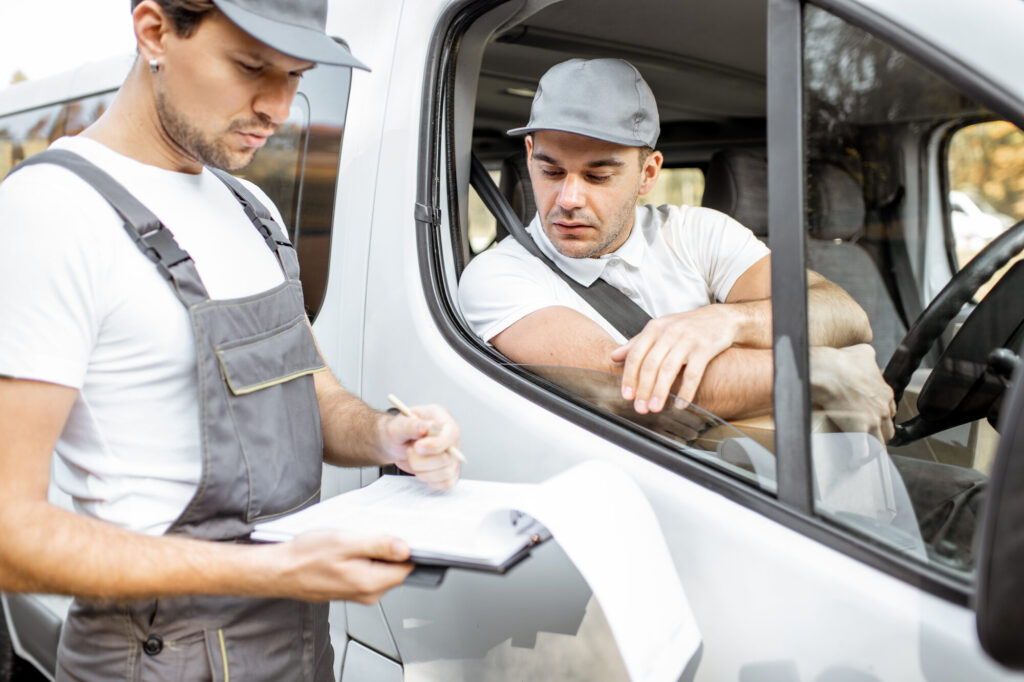
Accurate delivery addresses matter because paid delivery work depends on reaching the correct customer at the correct place. A small address error can cause delays, failed deliveries, wasted mileage and unhappy customers. Drivers should not have to solve basic address problems after they arrive in the area.
A useful delivery address should include more than a postcode. It may need a building name, unit number, floor, entrance, business name, loading bay, gate code or contact number. This is especially important for industrial estates, shopping centres, flats, hospitals, campuses and large office sites.
The booking process should collect the full address before the driver starts. If the customer gives vague instructions, the office or platform should ask for more detail. A driver who receives only partial information may lose time searching or calling for help.
For drivers carrying goods for payment, hire & reward insurance sits within the wider setup for commercial transport work. The driver is not making a private trip. The vehicle is being used to deliver goods or carry passengers in return for payment, so the business use needs to be recognised.
Address accuracy affects route planning. A wrong postcode can send the driver to the wrong side of town. A missing unit number can leave the driver outside a large building with no way to complete the delivery. A missing contact number can turn a simple drop into a failed job.
Delivery addresses should also match labels, job records and delivery notes. If the label shows one address but the driver’s system shows another, the goods may be delayed while the issue is checked. The person preparing the job should make sure all records agree before the goods are loaded.
Drivers should report repeated address problems. If the same site often gives unclear directions, the office can add notes for future jobs. These notes might include the correct entrance, parking area, reception desk or delivery bay. This saves time for other drivers.
Hire & reward insurance may cover different types of paid transport work depending on what the driver does. A courier, food delivery driver, taxi driver or other paid transport worker may not all need the same arrangement. The work type should be clear because the risk and vehicle use are not identical.
Accurate addresses also protect customer service. A customer may not care why the driver is delayed if the order arrives late. They may only see that the delivery failed. Better address collection reduces the chance of these problems before the driver reaches the road.
Some deliveries need extra instructions. A driver may need to avoid a low bridge, use a goods entrance, call security, deliver through reception or avoid certain hours. These instructions should sit with the address, not in a separate message that can be missed.
Drivers should avoid guessing when an address is unclear. Guessing can lead to goods being left at the wrong location or handed to the wrong person. It is better to stop and confirm than to complete a delivery that may later be disputed.
Technology can help, but it is not enough on its own. A map pin may be wrong. A postcode may cover several buildings. A driver app may not show the delivery entrance. Human checking is still important when the address has special details.
Hire & reward insurance supports the paid use of the vehicle, but address accuracy supports the actual delivery. One deals with cover. The other helps the driver complete the job correctly and efficiently.
Businesses can improve address quality by using required fields in booking forms, confirming unusual addresses and asking customers for clear site notes. They can also keep saved instructions for regular customers. This reduces repeated mistakes.