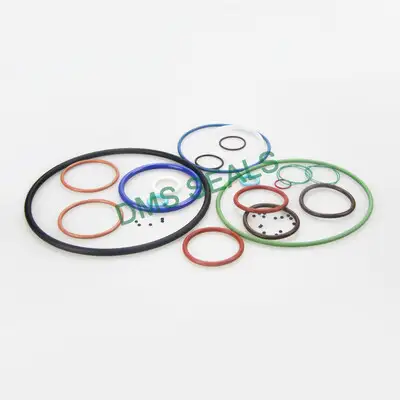
O-rings are widely used in industrial equipment to create dependable seals that prevent liquids and gases from escaping. They play an important role in industries such as automotive manufacturing, oil and gas, aerospace, hydraulics, and chemical processing. Although O-rings may appear to be simple components, their quality and performance can directly affect equipment efficiency, workplace safety, and maintenance costs.
Finding a professional O-Ring Supplier is therefore an important consideration for businesses that rely on effective sealing solutions. A dependable supplier offers more than a variety of products. Product consistency, technical knowledge, material selection, quality assurance, and reliable customer service are among the qualities that distinguish experienced suppliers from ordinary vendors.
Extensive Knowledge of Sealing Materials
One of the most important qualities of a professional supplier is a strong understanding of sealing materials. Different industrial applications require different material properties, and choosing an unsuitable elastomer can result in premature wear, swelling, cracking, or leakage.
Experienced suppliers understand the characteristics of commonly used materials, including:
- Nitrile (NBR): Offers good resistance to petroleum-based oils and fuels, making it suitable for hydraulic and automotive applications.
- Fluorocarbon (FKM): Provides resistance to elevated temperatures, oils, fuels, and many chemicals.
- EPDM: Commonly used in water systems, outdoor applications, and environments involving weather exposure.
- Silicone: Known for flexibility across a broad temperature range and used in applications requiring specific material properties.
- PTFE: Provides excellent chemical resistance and low friction, making it suitable for demanding sealing environments.
A knowledgeable supplier considers operating temperature, pressure, chemical exposure, and application conditions before recommending a material.
Consistent Product Quality and Manufacturing Standards
Product consistency is another characteristic that separates professional suppliers from less experienced market participants. O-rings must meet appropriate dimensional and material specifications to perform effectively.
Even minor manufacturing variations can affect compression, sealing contact, and overall service life.
A quality-focused supplier should maintain appropriate inspection procedures covering:
- Dimensional accuracy and tolerances.
- Material hardness and physical properties.
- Surface finish and visual defects.
- Batch consistency and traceability.
- Compliance with relevant industry specifications.
Depending on the application, customers may also require material certificates, inspection reports, or other supporting documentation. Professional suppliers understand the importance of providing appropriate quality records.
Wide Range of Standard and Custom Products
Industrial sealing requirements vary considerably between industries and equipment types. While standard O-ring sizes are suitable for many applications, specialized machinery may require non-standard dimensions or specific material formulations.
A professional supplier stands out by offering flexibility in product selection and sourcing.
This may include metric and imperial sizes, different cross-sectional dimensions, multiple elastomer options, and custom-manufactured sealing components.
The ability to accommodate specialized requirements is particularly valuable for manufacturers and maintenance teams working with older equipment or machinery designed around unique specifications.
Strong Technical Support and Application Guidance
Product availability alone does not make a supplier a reliable industrial partner. Technical support is equally important, especially when customers face complex sealing challenges.
An experienced supplier should be able to help customers understand material compatibility, dimensional requirements, installation considerations, and operating limitations.
For example, an O-ring designed for static sealing may not provide suitable performance in a dynamic application involving repeated movement. Similarly, a material that performs well in oil-based environments may not be appropriate for certain chemical-processing systems.
Professional technical guidance helps businesses avoid incorrect product selection and reduces the likelihood of recurring sealing problems.
Reliable Inventory and Timely Deliveries
Supply reliability is essential for industrial operations where equipment maintenance and production schedules depend on replacement components.
A delayed O-ring shipment can interrupt maintenance work or contribute to unnecessary equipment downtime. Professional suppliers recognize these challenges and establish processes to manage orders efficiently.
Important supply-related qualities include:
- Availability of commonly requested sizes and materials.
- Clear communication about stock levels.
- Realistic manufacturing and delivery timelines.
- Efficient order processing.
- Consistent handling of repeat orders.
Suppliers with effective inventory management can help customers plan purchases and maintain adequate supplies of essential sealing components.
Transparent Pricing and Long-Term Value
Competitive pricing is important, but professional suppliers understand that purchasing decisions should not be based solely on the lowest initial cost.
An inexpensive O-ring may become more costly over time if it requires frequent replacement or causes equipment leakage. Product quality, expected service life, and application suitability should all be considered when evaluating overall value.
A transparent supplier provides clear pricing information and explains relevant product differences without making unsupported performance claims.
Businesses should compare suppliers based on the total cost of ownership, including replacement frequency, maintenance requirements, installation costs, and the potential financial impact of equipment downtime.
Commitment to Customer Service
Effective communication is a major part of a professional supplier’s service. Customers need accurate information, timely responses, and practical assistance throughout the purchasing process.
A reliable supplier should be prepared to answer product-related questions, clarify specifications, communicate order updates, and address concerns when they arise.
Good customer service also involves understanding individual purchasing requirements rather than offering the same recommendation to every customer.
This approach helps build stronger business relationships and makes future procurement more straightforward.
Experience Across Different Industrial Sectors
Suppliers with experience in multiple industries often have a better understanding of the different conditions in which O-rings operate.
For instance, automotive applications may require resistance to oils, fuels, and temperature fluctuations. Food processing environments may require suitable material grades and relevant regulatory compliance. Hydraulic systems, meanwhile, place particular importance on pressure resistance and dimensional compatibility.
Industry experience allows suppliers to understand these differences and provide more informed product recommendations.
However, businesses should still verify that the specific products and materials meet the requirements of their intended applications.
How to Evaluate an O-Ring Supplier Before Making a Decision
Before establishing a purchasing relationship, businesses should assess potential suppliers using practical criteria rather than relying on product descriptions alone.
Consider the following questions:
- Does the supplier offer materials suitable for your operating conditions?
- Are product dimensions and manufacturing specifications clearly documented?
- Can the supplier provide relevant quality documentation?
- Does it offer technical assistance for specialized requirements?
- Are inventory levels and delivery timelines communicated clearly?
- Can it handle both routine purchases and customized orders?
- Does it demonstrate consistent communication and professional customer service?
Requesting technical datasheets, samples, or relevant quality records can provide additional confidence before placing larger orders.
Conclusion
A professional O-ring supplier stands out through a combination of product quality, technical expertise, material knowledge, manufacturing consistency, and dependable customer support. These qualities are essential for businesses that need sealing components capable of performing reliably under specific industrial conditions.
Choosing a supplier based on these factors can help reduce maintenance challenges, improve equipment reliability, and support more efficient procurement decisions. Ultimately, the most suitable supplier is one that understands the technical demands of industrial sealing applications and consistently meets the customer’s documented requirements.