Refractory materials must withstand high temperatures, chemical exposure, thermal shock, and mechanical stress. Their performance depends not only on the quality of the raw materials but also on how accurately those ingredients are combined. Uniform mixing is therefore an important stage in producing reliable refractory products.
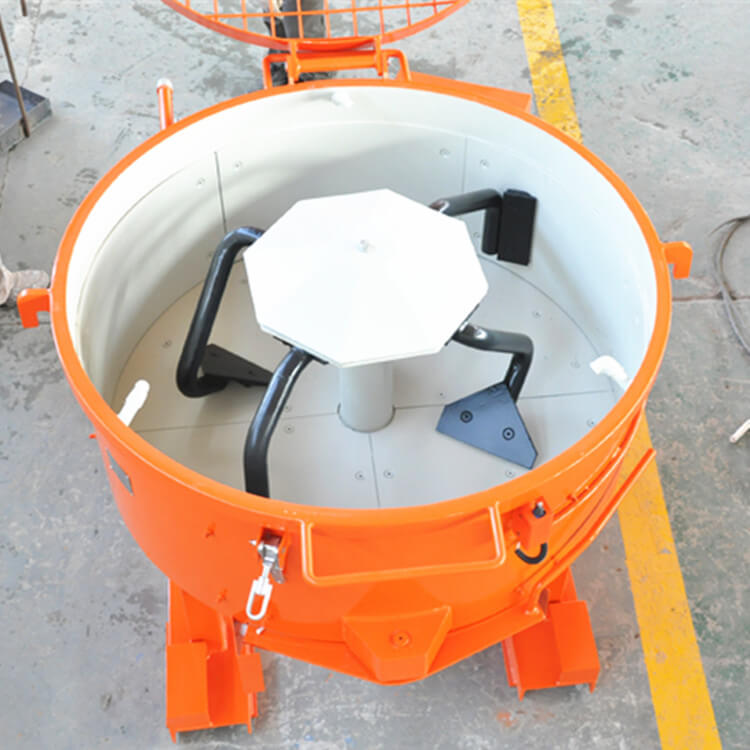
A Refractory Mixer is designed to combine refractory aggregates, powders, binders, additives, and other components into a consistent mixture. Depending on the formulation, the equipment may need to handle dry powders, granular materials, moisture, or liquid binders while providing sufficient mechanical action for thorough distribution.
What Is a Refractory Mixer?
A refractory mixer is industrial mixing equipment used to prepare materials for the manufacture of refractory products. These products can include castables, bricks, monolithic refractories, ramming materials, and other heat-resistant formulations.
The mixer brings together components with different particle sizes and physical properties. Its job is to distribute these ingredients as evenly as practical while maintaining the characteristics required by the final application.
The appropriate mixer design depends heavily on the refractory formulation and production process.
How Does a Refractory Mixer Work?
The mixing process generally begins with the controlled loading of aggregates and fine powders into the mixing chamber. The mixing tools then move the materials through the active mixing area.
As the tools rotate, particles are repeatedly redistributed. Binders, water, or other additives can be introduced according to the required mixing sequence.
The cycle continues until the material reaches the desired degree of uniformity and consistency.
Why Mixing Is Important in Refractory Production
Refractory formulations often contain materials with significantly different particle sizes. Coarse aggregates, intermediate particles, fine powders, binders, and additives must be distributed throughout the batch.
Poor mixing can create areas with different compositions, which may affect properties such as density, strength, porosity, thermal resistance, and workability.
Consistent mixing helps provide a more predictable material for subsequent forming, casting, or installation.
Key Features of Refractory Mixing Equipment
Intensive Material Circulation
Many refractory formulations benefit from strong material movement. Intensive circulation can help distribute fine powders and binders throughout the aggregate structure.
The required mixing intensity depends on the formulation and moisture level.
Suitable Mixing Tools
Mixing tools must withstand abrasive refractory materials. Tool geometry also influences how particles move through the chamber.
For demanding applications, wear-resistant construction can help extend component service life.
Controlled Ingredient Addition
Accurate addition of water, binders, and chemical additives is important for maintaining formulation consistency.
A suitable mixer can be integrated with weighing and dosing systems to improve process control.
Efficient Discharge
After mixing, the material needs to be transferred efficiently to the next production stage. An appropriate discharge system can reduce residual material and help maintain the intended production cycle.
Types of Refractory Materials That Can Be Mixed
Refractory mixers may be used for various material formulations, including:
- Monolithic refractories
- Castables
- Ramming mixes
- Dry refractory mixes
- Refractory mortars
- Precast refractory materials
- Heat-resistant compounds
- Ceramic-based refractory formulations
Different materials may require different mixing speeds, tools, moisture levels, and processing times.
Applications in Refractory Manufacturing
Refractory mixing equipment can support the production of materials used in high-temperature industries.
Typical applications include refractory products for:
- Steelmaking
- Cement plants
- Foundries
- Glass manufacturing
- Nonferrous metal processing
- Petrochemical facilities
- Incineration systems
- Industrial furnaces
The final product requirements determine the appropriate raw materials and mixing process.
Factors That Influence Mixing Quality
Mixing performance is affected by several variables. Manufacturers should control these factors carefully to achieve repeatable results.
Particle Size Distribution
A broad particle-size range can improve packing in some refractory formulations, but it also creates challenges for achieving uniform distribution.
Material Density
Large differences in density can encourage segregation during handling and mixing. The mixer must provide sufficient movement to keep the batch properly distributed.
Moisture Content
Water affects flowability, binder distribution, and the final consistency of many refractory materials. Small changes in moisture can influence processing behavior.
Binder Type
Different binders require different mixing conditions. The addition sequence and mixing intensity may need to be adjusted according to the binder system.
Mixing Time
The cycle should be long enough to achieve the required uniformity without creating unnecessary energy consumption or production delays.
Choosing the Right Refractory Mixer
Mixer selection should start with the characteristics of the material being produced.
Important considerations include:
- Batch capacity
- Required production rate
- Particle size distribution
- Material abrasiveness
- Binder and moisture content
- Required mixing intensity
- Mixing cycle time
- Discharge requirements
- Automation level
- Maintenance requirements
Selecting equipment based on the actual formulation can help avoid performance problems during production.
Wear Resistance and Maintenance
Refractory materials can be highly abrasive, so equipment wear should be considered from the beginning.
Mixing tools, liners, shafts, seals, and other exposed components may require regular inspection and replacement.
Using suitable wear-resistant materials and following a preventive maintenance schedule can help reduce unexpected downtime.
Automation in Refractory Mixing
Automated batching and mixing systems can improve consistency by controlling ingredient quantities and processing parameters.
Automation can be used to manage material dosing, water or binder addition, mixing time, mixing speed, and discharge.
For large-scale production, integration with storage, weighing, conveying, and packaging systems can further streamline the process.
Energy Efficiency
Intensive refractory mixing can require considerable mechanical energy. Efficient operation therefore involves balancing mixing intensity, cycle time, batch size, and production requirements.
Running the mixer longer or faster than necessary can increase energy consumption and component wear.
Optimizing the mixing cycle based on actual material behavior can provide a better balance between quality and operating efficiency.
Importance of Material Testing
Refractory formulations can vary considerably, so material testing can help establish appropriate mixing conditions.
Testing representative materials can provide information about mixing time, tool configuration, moisture addition, and final material uniformity.
This is particularly useful when introducing a new formulation or processing materials with unusual characteristics.
Conclusion
A refractory mixer plays an important role in preparing consistent materials for high-temperature applications. By combining aggregates, powders, binders, additives, and other components effectively, the mixer helps establish the material characteristics required for subsequent forming, casting, or installation.
The right equipment should be selected according to the refractory formulation, production volume, particle characteristics, mixing intensity, wear conditions, and automation requirements. Proper maintenance and process control can further support reliable operation and consistent refractory material quality.