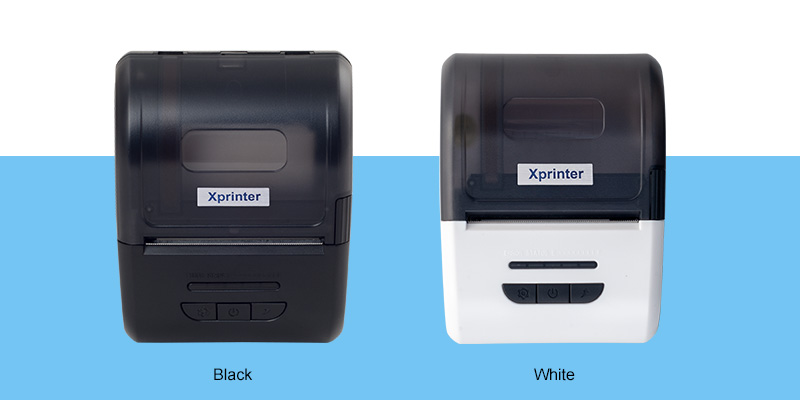
Businesses in retail, hospitality, and field services often need to print documents away from a fixed workstation. Portable printing technology makes it possible to produce receipts, invoices, tickets, order records, and other documents directly at the point of service.
A Mobile Printer can support these workflows by combining a compact design with features such as wireless connectivity and rechargeable battery power. This allows employees to print information while moving between customers, work areas, or service locations.
Benefits for Retail Businesses
Retailers can use portable printers to make checkout operations more flexible. Employees can process transactions on the sales floor and provide printed receipts without requiring every customer to visit a traditional checkout counter.
This can be particularly useful during busy periods when fixed registers become crowded. Mobile printing can help distribute transaction activity across different areas of a store.
Supporting Mobile Checkout
When paired with a mobile POS system, a portable printer allows employees to complete more of the sales process at the customer’s location. This can reduce unnecessary movement between payment terminals and fixed printers.
It can also be useful for pop-up stores, temporary sales areas, markets, and retail events where permanent checkout equipment may not be practical.
Benefits for Hospitality Businesses
Restaurants, cafés, food trucks, and other hospitality businesses can benefit from portable printing in several ways. Staff may need to print receipts, order information, or transaction records while working across different areas.
For businesses with limited counter space, a compact printer can provide greater flexibility without requiring a large permanent printing station.
Faster Service
Printing documents close to the point of service can reduce delays caused by moving between work areas. Staff can complete a transaction and provide the required document without making an additional trip to a fixed printer.
This can help create a smoother workflow during busy service periods.
Benefits for Field Services
Field technicians and service professionals often work at customer locations rather than in offices. Carrying a portable printer can allow them to provide invoices, receipts, service confirmations, or other paperwork immediately after completing a job.
This can reduce the need to return to an office simply to produce documentation and can make administrative tasks more convenient.
Useful for Mobile Workers
Portable printing is particularly valuable when employees spend most of their working day on the move. Wireless connections can allow printers to communicate with compatible smartphones, tablets, or handheld terminals.
The result is a workflow that keeps documentation closer to the actual service location.
Key Advantages Across Industries
Although specific applications vary, businesses in these sectors can benefit from several common characteristics:
- Portability: Employees can carry the printer between locations.
- Wireless connectivity: Compatible devices can send print jobs without relying on fixed cables.
- Battery operation: Rechargeable batteries allow printing away from power outlets.
- Compact size: Portable designs require less workspace than many traditional printers.
- Point-of-service printing: Documents can be produced where transactions or services take place.
Considerations Before Choosing a Mobile Printer
Not every portable printer is suitable for every business. Retailers, hospitality operators, and field-service companies should consider the type of documents they need to print and the conditions in which the device will operate.
Important factors include battery life, wireless connectivity, print speed, paper or media compatibility, device compatibility, and durability. Businesses with high transaction volumes may also need to consider printing capacity and charging requirements.
Conclusion
Mobile printers can provide practical benefits for businesses that need to print documents while working away from fixed stations. In retail, they can support flexible checkout operations. In hospitality, they can help streamline service workflows, while field-service teams can use them to provide documentation directly at customer locations.
The most suitable solution depends on the business’s specific requirements. By considering portability, connectivity, battery performance, printing needs, and durability, organizations can select a printer that fits their everyday workflow.