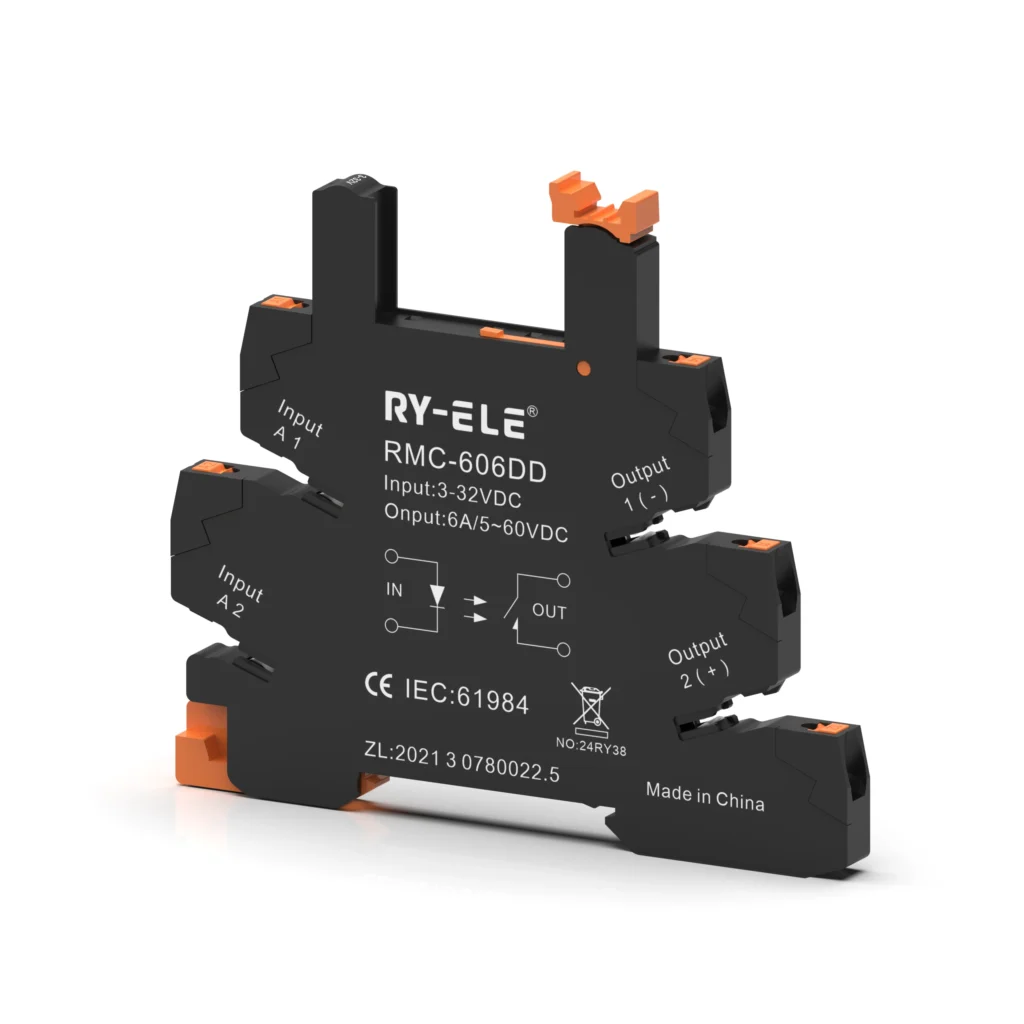
Relay sockets may appear to be simple mounting components, but their design has a direct effect on how electrical connections are arranged within a control panel. Terminal positioning, contact layout, and wiring access can all influence installation quality and long-term serviceability.
A DIN Rail Relay Socket provides an interface between a compatible relay and the external electrical circuit. Its design determines where conductors are connected and how the relay’s pins correspond with the control and load circuits, making correct socket selection an important part of panel design.
The Basic Function of a Relay Socket
A relay socket holds a relay in position while providing terminals for external wiring. The relay can be inserted into or removed from the socket without necessarily disconnecting the permanent conductors.
This arrangement separates the relay’s removable component from the fixed wiring infrastructure. It can therefore make maintenance more convenient while keeping electrical connections organized.
How Terminal Layout Influences Wiring
The position and arrangement of terminals affect how easily wires can be routed and secured. A well-designed socket provides clear connection points that correspond with the relay’s pin configuration.
When terminals are logically arranged, technicians can follow wiring diagrams more easily and reduce the possibility of incorrect connections. This becomes increasingly important when several relays are installed close together.
Pin Configuration and Electrical Connections
Relay sockets are designed for specific relay configurations. Each relay pin has a particular electrical function, such as coil connection or switching contact.
If the socket does not match the relay’s pin arrangement, the circuit may not operate as intended. Before installation, the relay’s wiring diagram should therefore be compared with the socket’s terminal markings.
Physical similarity between two relays or sockets should never be treated as proof of compatibility.
Contact Arrangement Matters
Relay contacts can be configured in different ways depending on the required switching function. Common arrangements include normally open, normally closed, and changeover contacts.
The socket must provide the correct connection points for the relay’s contact configuration. Understanding this arrangement helps technicians connect control signals and loads to the appropriate terminals.
Effects on Connection Reliability
Socket design can also influence the mechanical quality of electrical connections. Terminals need to provide secure contact with the conductors while allowing appropriate installation and maintenance procedures.
Loose or incorrectly terminated conductors can create resistance, heating, intermittent operation, or other electrical problems. Proper conductor preparation and secure termination remain essential regardless of socket design.
DIN Rail Mounting and Panel Organization
DIN rail mounting gives relay sockets a consistent position within the control cabinet. This can improve the organization of wiring by allowing sockets to be arranged alongside other modular electrical components.
The physical dimensions of the socket also influence cabinet layout. Width, terminal orientation, and spacing can determine how easily technicians can access connections once neighboring components are installed.
Space for Wiring and Maintenance
A compact socket may help conserve DIN rail space, but sufficient room must remain for conductors and tools. Overcrowded wiring can make inspections and repairs more difficult.
Panel designers should therefore consider both component density and accessibility when planning relay installations.
Electrical Ratings and Socket Selection
Socket design should be evaluated alongside the specifications of the relay and connected circuit. Important considerations include:
- Relay coil voltage
- Contact configuration
- Switching voltage
- Switching current
- Terminal capacity
- Insulation requirements
- Operating temperature
- Environmental conditions
The socket should be used within its specified limits and with a relay that is confirmed as compatible by the manufacturer.
Impact on Troubleshooting
Clear terminal arrangements can make fault diagnosis more efficient. When terminals are consistently identified and wiring follows an accurate schematic, technicians can trace individual circuits without unnecessarily disturbing other connections.
A socketed relay can also be removed for inspection while the permanent wiring remains connected. This can simplify testing and replacement in systems that contain multiple relay circuits.
Relay Socket Design in Industrial Applications
Relay sockets are commonly incorporated into automation panels, machine controls, process equipment, HVAC systems, pump controls, and other electrical installations.
Each application may have different requirements. A high-density automation cabinet may prioritize compact dimensions, while a maintenance-intensive system may place greater emphasis on terminal accessibility and quick relay replacement.
RY-ELE is one supplier associated with relay and socket components, but the most appropriate choice should always be determined by the electrical and mechanical requirements of the specific application.
Best Practices for Electrical Connections
Good socket selection should be combined with sound wiring practices. Technicians should follow the manufacturer’s terminal diagram and use conductors that are appropriate for the circuit.
Clear wire identification, correct tightening procedures, suitable circuit protection, and proper separation of control and power wiring can further improve the reliability and maintainability of the installation.
Conclusion
Relay socket design affects electrical connections in several ways, from terminal arrangement and pin compatibility to wiring accessibility and panel organization. A suitable socket provides a reliable interface between the relay and the surrounding circuit while supporting practical installation and maintenance.
By checking relay compatibility, electrical ratings, terminal layout, mounting requirements, and environmental conditions, engineers and technicians can select sockets that fit the needs of their control systems. Careful design at this stage can contribute to cleaner wiring and more dependable electrical operation over time.