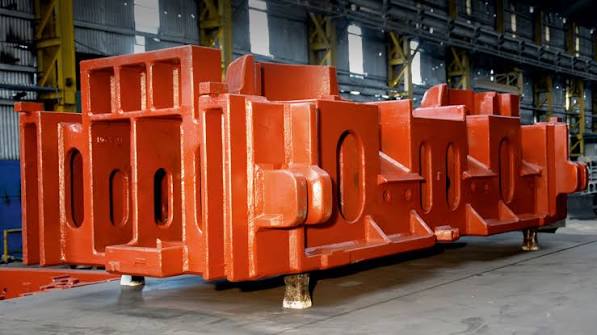
Iron casting has played an important role in industrial manufacturing for centuries. It is used to produce durable components for automotive systems, construction equipment, agricultural machinery, mining operations, and various mechanical applications. Although the basic principle of melting iron and pouring it into molds remains unchanged, modern technology has significantly improved how castings are designed, produced, inspected, and finished.
Today, digital engineering tools, automated equipment, advanced melting systems, and modern testing methods help foundries achieve better production consistency and reduce manufacturing defects. An experienced Iron Castings Manufacturer can use these technologies to improve process control, meet demanding specifications, and manufacture components for different industrial requirements. Understanding these developments explains why technology has become an essential part of modern iron casting.
1. Computer-Aided Design Improves Casting Development
Computer-aided design (CAD) software has transformed the early stages of iron casting production. Engineers can create detailed three-dimensional models of components before manufacturing patterns or molds.
These digital models make it easier to examine dimensions, wall thicknesses, internal features, and connections. Designers can also identify areas where the component geometry may create manufacturing difficulties.
CAD technology provides several advantages:
- Improves dimensional planning before production begins.
- Makes design modifications easier and faster.
- Helps identify potential structural weaknesses.
- Supports communication between engineers and manufacturing teams.
- Provides accurate digital information for pattern and tooling development.
By identifying design problems early, manufacturers can reduce unnecessary revisions and improve the transition from product design to casting production.
2. Casting Simulation Helps Predict Production Problems
<AsyncImage query=”metal casting simulation software molten metal flow solidification engineering computer screen” aspectRatio=”16:9″ width=”100%”/>
Casting simulation software allows engineers to study how molten iron flows into a mold and solidifies. Instead of relying entirely on physical trial production, manufacturers can evaluate different process conditions through computer models.
Simulation can help identify areas where metal flow may become turbulent, where air could become trapped, or where shrinkage defects may develop during solidification.
Engineers can use these results to adjust gating systems, riser positions, and mold designs before starting full production.
This technology is particularly useful for complex components because it helps reduce trial-and-error work. Although simulation results still need to be validated through actual production and inspection, they provide valuable information for making better manufacturing decisions.
3. Automated Melting Systems Improve Temperature Control
Temperature management is essential for producing reliable iron castings. Molten metal must reach an appropriate temperature to achieve suitable fluidity and fill the mold correctly.
Modern foundries increasingly use automated furnace controls and temperature monitoring equipment to improve consistency. These systems help operators monitor melting conditions and make adjustments when necessary.
Induction furnaces are also widely used in iron foundries because they provide controlled heating through electromagnetic induction. Their operating parameters can be adjusted to suit different production requirements.
Improved temperature control helps manufacturers:
- Maintain more consistent melting conditions.
- Reduce unnecessary temperature variations.
- Support repeatable pouring operations.
- Improve energy management.
- Reduce the risk of temperature-related casting defects.
Automated monitoring does not replace skilled operators, but it provides more accurate information for managing the melting process.
4. Robotic Systems Improve Pouring and Material Handling
<AsyncImage query=”industrial foundry robotic arm automatic molten metal pouring into sand casting mold” aspectRatio=”16:9″ width=”100%”/>
Pouring molten iron requires careful control because incorrect pouring speed, turbulence, or handling can affect casting quality. Automated pouring systems and industrial robots help perform these operations with greater repeatability.
Robotic equipment can also support mold handling, material transportation, and other repetitive foundry tasks.
The main benefits include:
- More consistent pouring movements.
- Reduced variation between production cycles.
- Improved operator safety by limiting exposure to hazardous areas.
- Better handling of heavy molds and components.
- Increased productivity in suitable production environments.
Automation is particularly valuable in high-volume manufacturing, where consistent operating conditions are important for maintaining product quality.
5. Advanced Molding Technology Supports Better Accuracy
Mold quality has a direct influence on the dimensions, surface finish, and overall condition of an iron casting. Modern molding equipment helps foundries produce molds with more consistent shapes and controlled properties.
Automated sand preparation systems can regulate important variables such as moisture content, sand composition, and compaction. These factors influence mold strength, permeability, and resistance to erosion during pouring.
Modern molding lines can also improve pattern positioning and reduce variations between molds.
For components with complex internal passages, advanced core-making methods help produce more accurate shapes. Better mold and core preparation reduces the likelihood of dimensional problems and defects caused by unstable mold structures.
6. 3D Printing Accelerates Pattern and Core Production
<AsyncImage query=”industrial 3D sand printing casting mold core foundry additive manufacturing” aspectRatio=”16:9″ width=”100%”/>
Additive manufacturing, commonly known as 3D printing, is introducing new possibilities for casting pattern and mold production.
Industrial 3D sand printers can produce molds and cores directly from digital designs. This approach is useful for components with complex internal geometries that may be difficult or expensive to manufacture using conventional tooling.
Some important advantages include:
- Faster development of prototypes.
- Greater flexibility for complex mold designs.
- Reduced dependence on traditional pattern tooling for certain projects.
- Easier modification of digital designs.
- Support for specialized and low-volume production.
Although 3D printing may not be the most economical choice for every high-volume casting project, it offers valuable flexibility when producing complex or customized components.
7. Digital Monitoring Improves Production Control
Modern foundries increasingly use digital sensors and monitoring systems to collect information throughout the production process. These systems can track furnace temperatures, pouring conditions, equipment performance, and other important operating variables.
The collected information helps production teams understand how different process conditions influence casting results.
For example, repeated temperature variations may indicate a furnace control issue, while changes in molding parameters could contribute to inconsistent mold quality.
Digital monitoring supports:
- Real-time visibility into production conditions.
- Earlier identification of process variations.
- More consistent operating procedures.
- Improved production records.
- Data-based decisions for process improvement.
When monitoring systems are integrated with manufacturing management software, production teams can analyze information from different stages more effectively.
8. Artificial Intelligence Supports Defect Detection
Artificial intelligence (AI) is creating new opportunities for quality control in foundries. Machine learning systems can analyze production data and, when properly trained, identify patterns associated with certain casting defects.
Computer vision technology can also examine casting surfaces for visible imperfections such as cracks, irregularities, and surface cavities.
AI-based inspection systems may help manufacturers:
- Identify recurring defect patterns.
- Support automated visual inspection.
- Analyze relationships between process settings and product quality.
- Prioritize components for further examination.
- Improve consistency in repetitive inspection tasks.
AI should be considered a supporting tool rather than a complete replacement for experienced inspectors. Complex internal defects and material properties still require appropriate testing methods.
9. Non-Destructive Testing Improves Quality Assurance
<AsyncImage query=”industrial non destructive testing ultrasonic inspection metal iron casting technician” aspectRatio=”16:9″ width=”100%”/>
Quality inspection is essential because some casting defects cannot be identified through visual examination alone. Non-destructive testing (NDT) allows manufacturers to examine components without damaging them.
Several methods are used depending on the material, component geometry, and inspection requirements.
Ultrasonic testing: Uses high-frequency sound waves to identify certain internal discontinuities.
Radiographic testing: Uses X-rays or gamma rays to examine internal structures and detect suitable types of defects.
Magnetic particle testing: Helps identify surface and near-surface discontinuities in ferromagnetic materials.
Liquid penetrant testing: Reveals surface-breaking defects in suitable nonporous materials.
These methods help manufacturers verify casting quality before components move to machining, assembly, or delivery. The choice of inspection technique depends on the required level of assurance and applicable standards.
10. CNC Machining Improves Dimensional Precision
Many iron castings require additional machining to achieve precise dimensions and surface finishes. Computer numerical control (CNC) machines use programmed instructions to control cutting operations with repeatable accuracy.
CNC milling, turning, drilling, and boring can be used to produce mounting surfaces, holes, threads, and other functional features.
Modern machining technology offers several benefits:
- Consistent dimensions across production batches.
- Improved repeatability for complex components.
- Reduced dependence on manual positioning.
- Better control over surface finish.
- Easier integration with digital design information.
Machining accuracy still depends on proper fixture design, tool selection, cutting parameters, and the quality of the original casting. Combining controlled casting production with precision machining helps achieve the required finished component specifications.
11. Energy-Efficient Technology Supports Sustainable Production
Iron casting requires considerable energy, particularly during melting and heat treatment. Improving energy efficiency is therefore an important objective for modern foundries.
Newer furnace controls, efficient induction systems, improved insulation, and optimized production schedules can help reduce unnecessary energy consumption.
Manufacturers can also improve resource efficiency through metal recovery and recycling. Suitable scrap and returned metal can be reused as charge materials when properly sorted and controlled to maintain the required chemical composition.
Other approaches include:
- Monitoring energy consumption across production stages.
- Reducing avoidable melting and holding time.
- Improving equipment maintenance.
- Optimizing production batches.
- Reducing rejected castings and material waste.
Sustainable manufacturing requires more than adopting new equipment. It also involves measuring resource use and continuously improving production practices.
12. Digital Quality Records Improve Traceability
Industrial buyers often require information about the materials, production conditions, and inspection results associated with their components. Digital recordkeeping makes it easier to organize and retrieve this information.
Manufacturers can use digital systems to store chemical analysis results, heat numbers, inspection reports, dimensional measurements, and production batch information.
This improves traceability by helping teams connect a finished casting with its manufacturing history.
Digital records can also support internal audits, customer documentation, and investigations when quality concerns arise. Accurate information makes it easier to identify where a problem occurred and determine whether corrective action is necessary.
13. Smart Maintenance Reduces Equipment Downtime
Foundry equipment operates under demanding conditions involving heat, dust, vibration, and heavy material handling. Unexpected equipment failures can interrupt production and affect delivery schedules.
Predictive maintenance technologies use sensors and equipment data to identify signs of potential problems before a breakdown occurs.
For example, vibration monitoring can help detect unusual machine behavior, while temperature and operating data may indicate changes in equipment performance.
By combining predictive maintenance with regular inspections, manufacturers can schedule repairs more effectively and reduce avoidable downtime.
14. Technology Improves Custom Iron Casting Production
Different industries require components with specific shapes, dimensions, and mechanical properties. Modern design and manufacturing technologies make it easier to develop castings for specialized applications.
CAD modeling helps engineers prepare customized designs, while simulation supports process planning. Advanced molding methods and CNC machining provide additional flexibility when producing components with unusual geometries or precise functional features.
These capabilities are useful for manufacturers serving industries such as automotive production, agriculture, construction, mining, and industrial machinery.
However, customization still requires careful evaluation of material grades, production quantities, tooling costs, and inspection requirements. Technology makes the process more flexible, but sound engineering remains essential.
The Future of Technology in Iron Casting
The development of iron casting technology is likely to focus increasingly on connected manufacturing systems, advanced automation, improved process simulation, and data-driven quality management.
Digital twins may allow manufacturers to create virtual representations of production equipment or casting processes to study performance and evaluate changes. More advanced inspection systems may improve defect recognition, while integrated manufacturing software can connect design, production, and quality records.
Additive manufacturing may also become more useful for specialized molds and cores as equipment and material capabilities develop.
The most effective approach will combine modern technology with practical foundry experience. Skilled engineers and operators remain important for interpreting data, selecting suitable materials, and ensuring that production decisions meet actual application requirements.
Conclusion
Advanced technology is improving modern iron casting by making production more controlled, accurate, and efficient. CAD design, casting simulation, automated melting, robotic pouring, 3D printing, digital monitoring, and advanced inspection methods each contribute to better manufacturing outcomes.
These technologies help reduce process variations, identify potential defects, improve dimensional accuracy, and support more efficient use of materials and energy. Their value is greatest when they are integrated into a well-managed production system supported by technical expertise and consistent quality procedures.
As industrial requirements continue to evolve, technology will remain an important factor in helping iron foundries manufacture reliable components for increasingly demanding applications.