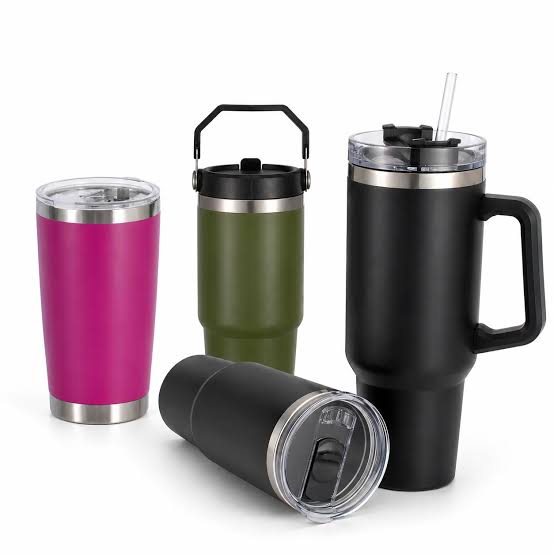
Quality control is a critical part of drinkware production because these products are designed for direct contact with beverages and frequent everyday use. From reusable water bottles and travel mugs to tumblers and drinking cups, each product must meet appropriate standards for safety, durability, appearance, and functionality. Consistent quality also helps manufacturers reduce defects and maintain customer confidence.
For businesses sourcing drinkware in large quantities, understanding inspection procedures and product standards is essential. Working with an experienced Drinkware Manufacturer can help buyers understand how materials are selected, production processes are monitored, and finished products are evaluated before shipment.
Quality control involves more than checking whether a product looks attractive. It requires a systematic approach that covers raw materials, manufacturing operations, assembly, performance testing, and final inspection.
1. Why Quality Control Matters in Drinkware Manufacturing
Drinkware products are used repeatedly and must perform reliably under different conditions. A poorly manufactured bottle may leak, a tumbler may lose its insulation performance, or a cup may develop cracks during normal handling.
Quality control helps identify these issues before products reach customers. It also allows manufacturers to maintain consistent specifications across production batches.
Effective quality management can provide several benefits:
- Improved product safety and reliability
- Fewer manufacturing defects
- Better consistency between batches
- Reduced product returns and complaints
- Greater customer satisfaction
- More efficient use of production resources
For manufacturers supplying retailers, wholesalers, and private-label brands, these benefits are particularly important because one defective production batch can affect a large number of customers.
2. Understanding Raw Material Quality Standards
The quality of finished drinkware begins with the materials used during production. Different materials have different properties, performance requirements, and safety considerations.
Common drinkware materials include stainless steel, glass, plastics, and silicone. Each requires appropriate inspection procedures.
Stainless Steel
Stainless steel is widely used for reusable bottles, tumblers, and insulated drinkware. Manufacturers should verify the material grade, thickness, surface condition, and suitability for the intended application.
Material documentation and appropriate testing can help confirm whether the selected steel meets the required specifications.
Glass
Glass drinkware should be inspected for cracks, bubbles, uneven thickness, and other visible defects. Depending on the product design, manufacturers may also evaluate thermal or impact-related performance.
Plastic
Plastic drinkware requires careful attention to material identification and food-contact suitability. Buyers should request relevant documentation and testing evidence for the specific material and intended market.
Silicone
Silicone components are often used in seals, lids, grips, and flexible accessories. Inspection should consider flexibility, dimensional accuracy, durability, and suitability for the intended food-contact application.
Selecting appropriate materials is the foundation of a reliable quality control system.
3. Food-Contact Safety and Regulatory Compliance
One of the most important quality considerations in drinkware manufacturing is whether materials are suitable for contact with beverages.
Food-contact requirements vary depending on the material, product design, and destination market. Manufacturers and buyers must identify the regulations that apply to the products being sold.
For example, products entering the European Union may need to comply with applicable food-contact legislation, including Regulation (EC) No 1935/2004 and relevant material-specific requirements. Products sold in the United States may be subject to applicable FDA food-contact requirements.
Depending on the material and market, relevant evaluations may include:
- Overall or specific migration testing
- Chemical composition assessments
- Heavy metal testing where applicable
- Coating and surface safety evaluations
- Documentation of material suitability
- Traceability of tested materials
Buyers should verify that test reports relate to the actual product or material being supplied. A general statement that a product is food-safe is not a substitute for relevant compliance evidence.
4. Dimensional Accuracy and Product Specifications
Drinkware must meet defined dimensions to ensure that components fit properly and products function as intended.
Manufacturers should establish specifications for measurements such as height, diameter, capacity, wall thickness, and opening size.
Dimensional inspections are particularly important for products with multiple components. A lid that does not fit correctly may cause leakage, while an incorrectly sized seal may affect the product’s performance.
Quality teams can use measuring instruments and approved samples to check whether production units remain within the specified tolerances.
Businesses should confirm important dimensions before manufacturing begins, especially when ordering customized drinkware or products designed to fit existing accessories.
5. Leak-Proof Performance Testing
Leakage is one of the most common concerns associated with bottles and travel mugs. Even a visually attractive product may be unsuitable if its lid, gasket, or closure system does not seal properly.
Leak testing helps identify problems in the design, component assembly, or manufacturing process.
Depending on the product, testing may involve:
- Filling the container with water.
- Closing the lid according to the manufacturer’s instructions.
- Positioning the product in specified orientations.
- Checking for leakage around the lid, seal, and body.
- Recording the results against defined acceptance criteria.
Some products may also require pressure or repeated-use evaluations.
The test method should reflect how the product is intended to be used. Buyers should ask manufacturers what leakage tests are performed and how frequently products are inspected.
6. Insulation and Temperature Retention Testing
Insulated drinkware is designed to help maintain beverage temperatures over a period of time. Its performance depends on the construction of the product, insulation method, lid design, and manufacturing consistency.
Vacuum-insulated stainless steel products, for example, require appropriate evaluation of their insulation performance and structural integrity.
Testing may involve measuring the temperature of a beverage at the beginning of a controlled test and comparing it with the temperature after a specified period.
Manufacturers should define the testing conditions, including starting temperature, ambient environment, test duration, and measurement method.
This is important because temperature-retention claims can vary significantly depending on how they are measured. Buyers should avoid comparing performance figures unless the testing conditions are similar.
7. Surface Finish and Appearance Inspection
Appearance is an important part of product quality, particularly for branded drinkware sold through retail channels.
Surface inspection helps identify cosmetic defects that may affect the product’s perceived value.
Common issues include:
- Scratches and dents
- Uneven polishing
- Discoloration
- Paint or coating defects
- Printing inconsistencies
- Rough edges
- Visible manufacturing marks
Manufacturers should establish acceptable appearance standards and inspect products under suitable lighting conditions.
For customized drinkware, logo placement, color consistency, and printing quality should also be checked against approved artwork or samples.
8. Coating and Printing Durability
Many drinkware products feature powder coatings, painted surfaces, printed designs, or laser-engraved logos. These finishes must remain acceptable during normal handling and cleaning.
Quality testing may include assessments of coating adhesion, abrasion resistance, and color consistency. The appropriate method depends on the finish and intended product use.
For printed designs, manufacturers should check whether artwork is correctly positioned and whether the print has visible defects.
Buyers should also understand the product’s recommended cleaning instructions. A finish that is suitable for handwashing may not necessarily be suitable for repeated dishwasher cycles.
Clear performance requirements help prevent disagreements about expected finish durability.
9. Lid, Seal, and Component Inspection
Drinkware often contains several parts that must work together. These may include lids, straws, handles, gaskets, drinking spouts, and removable bases.
A defect in a small component can affect the performance of the entire product.
Inspection should cover:
- Correct component dimensions
- Secure fitting and attachment
- Proper sealing performance
- Smooth opening and closing
- Consistent operation of moving parts
- Absence of sharp edges or loose components
Manufacturers should also check whether replacement parts are available when relevant. This can be useful for businesses that sell drinkware with removable or replaceable accessories.
10. Structural Strength and Durability Testing
Drinkware products are frequently carried in bags, placed on desks, washed, and exposed to repeated handling. Their construction should be suitable for the expected conditions of use.
Durability evaluations may include drop testing, impact assessments, deformation checks, and repeated-use testing.
The appropriate procedures differ by material and product category. A glass tumbler, plastic bottle, and stainless steel travel mug should not automatically be assessed using identical methods.
Manufacturers should establish realistic testing criteria based on product design and intended use.
These evaluations help identify weak areas, such as fragile joints, poorly attached handles, or components that become loose after repeated use.
11. In-Process Quality Inspections
Quality control should not be limited to the final production stage. Inspecting products during manufacturing allows defects to be identified before they affect an entire batch.
In-process inspections may take place during material preparation, forming, welding, polishing, coating, printing, and assembly.
For example, checking a stainless steel bottle after forming can help identify dimensional problems before additional finishing operations are completed.
Early inspection also reduces wasted materials and production time. Manufacturers can investigate the cause of recurring defects and adjust equipment or procedures when necessary.
12. Final Product Inspection
Final inspection is performed after manufacturing and assembly are complete. It helps determine whether finished products meet the agreed specifications before packing or shipment.
The inspection process may include:
- Visual appearance checks
- Dimensional measurements
- Capacity verification
- Leak testing
- Lid and accessory checks
- Functional evaluations
- Packaging verification
- Review of product labeling
Not every unit is necessarily subjected to every test. Manufacturers may use defined inspection plans based on product risk, order requirements, and applicable standards.
For bulk orders, buyers should agree on the inspection method and acceptable defect levels before production begins.
13. Sampling Methods and Acceptance Criteria
Sampling is commonly used to evaluate the quality of large production batches. Instead of inspecting every unit in the same way, a defined number of products may be selected for detailed examination.
Some manufacturers and buyers use statistical sampling plans, including procedures based on ISO 2859-1, where appropriate.
Acceptance Quality Limit (AQL) sampling can help establish a consistent approach to deciding whether a batch is acceptable. However, AQL is not a guarantee that every product in a batch is defect-free.
Buyers should agree on:
- Sample size
- Inspection level
- Critical, major, and minor defect classifications
- Acceptance and rejection criteria
- Procedures for handling rejected batches
These details should be documented before production to avoid uncertainty during final inspection.
14. Quality Management Systems and ISO Standards
A structured quality management system helps manufacturers control processes, document responsibilities, and improve production performance.
ISO 9001 is an internationally recognized quality management system standard. It provides a framework for managing processes, monitoring performance, addressing nonconformities, and supporting continual improvement.
However, ISO 9001 certification does not automatically mean that every drinkware product meets all food-contact or product safety requirements.
Businesses should distinguish between management system certification and product-specific testing or regulatory compliance.
They should also verify the validity and scope of any certificates provided by a supplier.
15. Documentation and Product Traceability
Documentation helps manufacturers and buyers understand how products were produced and whether required checks were completed.
Useful quality records may include:
- Raw material inspection reports
- Material certificates and declarations
- Production inspection records
- Laboratory test reports
- Final inspection results
- Batch identification details
- Corrective action records
Traceability is especially useful when a quality issue appears after products have been distributed. If batches are properly identified, businesses may be able to investigate affected production more efficiently.
Buyers should discuss how suppliers record production batches and retain relevant quality documentation.
16. Corrective Actions and Continuous Improvement
Quality control should be an ongoing process. Even manufacturers with established inspection systems may occasionally encounter defects or production inconsistencies.
When a problem is identified, the manufacturer should investigate its underlying cause rather than simply removing the affected products.
A corrective action process may involve:
- Identifying and recording the defect.
- Determining which products or batches are affected.
- Investigating the root cause.
- Implementing corrective measures.
- Checking whether the measures are effective.
- Updating procedures to prevent recurrence.
This approach can improve production reliability over time and reduce repeated quality problems.
17. How Buyers Can Evaluate a Manufacturer’s Quality Standards
Businesses should review a supplier’s quality practices before placing large orders. A detailed evaluation can reveal whether the manufacturer has the technical capabilities and processes needed to meet product requirements.
Useful questions include:
- What raw material specifications are followed?
- Which food-contact safety documents are available?
- What inspections are performed during production?
- Are leakage and durability tests conducted?
- How are customized products checked?
- What sampling procedures are used for bulk orders?
- Can the supplier provide relevant test reports?
- How are defective products and customer complaints handled?
Buyers should request product samples and compare them with the written specifications. For important orders, an independent inspection may provide additional confidence before shipment.
Conclusion
Quality control standards in drinkware manufacturing cover every stage of production, from raw material selection and food-contact safety to assembly, performance testing, and final inspection. Each stage contributes to the reliability, appearance, and durability of the finished product.
Businesses sourcing drinkware should look beyond general quality claims and examine the actual inspection procedures, documentation, and testing evidence available from a supplier. Understanding relevant regulations and agreeing on clear acceptance criteria can also reduce risks when purchasing in bulk.
A systematic approach to quality evaluation helps manufacturers maintain consistent production standards while allowing buyers to make better-informed sourcing decisions.