Nasreen Akhtar was diagnosed with type 2 diabetes on a Tuesday afternoon, in a ten-minute appointment that ended with a leaflet and a follow-up date six weeks away. She went home with a hundred questions and nobody to ask. Then her daughter installed a diabetes management app on her phone. Within a month, Nasreen was logging her glucose readings, swapping meal ideas with women in a peer group who cooked the same food she did, and messaging a diabetes nurse who replied the same day. The disease hadn’t changed. The loneliness around it had.
Stories like hers explain why hospitals, clinics, and startups keep knocking on the door of every Healthcare App Development company they can find. They’ve realized that the best digital health tools do more than store records. They connect people. This post looks at how healthcare apps are building patient communities, what’s working, what’s still broken, and what organizations should weigh before they build one.
Why Patients Felt Isolated for So Long
Traditional care is episodic. You see a doctor, you leave, and the next real contact might be months away. In between, patients manage symptoms, medication schedules, and fear on their own.
Chronic conditions make this worse. Someone living with heart failure, rheumatoid arthritis, or depression spends maybe a few hours a year with clinicians and thousands of hours managing the illness alone. Family tries to help, but they rarely know what a flare-up feels like or why a new medication makes you queasy.
Patients have always looked for each other. Support groups in church basements, hospital waiting rooms, and phone trees were the original patient communities. They worked, but they depended on geography and schedule. If you lived in a small town, had a rare condition, or couldn’t travel, you were out of luck.
Healthcare apps removed those walls. A woman in Karachi managing endometriosis can now talk to someone in Leeds who’s been through the same surgery. A teenager with Crohn’s can find peers without explaining himself to a room full of adults.
From Patient Portals to Patient Networks
The first wave of health apps were patient portals. MyChart from Epic Systems and the NHS App in the UK gave people access to test results, appointment bookings, and prescription refills. Useful, yes, but mostly one-directional. Information flowed from the system to the patient.
The second wave added conversation. Platforms such as PatientsLikeMe let people with similar diagnoses compare symptoms, treatments, and outcomes. Teladoc and Doctolib made video visits routine. In Pakistan, services like Marham and Sehat Kahani brought online consultations to people who previously had to travel hours to reach a specialist.
The third wave, happening now, blends clinical care with community. A single app might offer a secure chat with your care team, a peer forum, educational videos, medication reminders, and a way to share your progress with family. The patient stops being a recipient and becomes a participant.
Peer Support Groups Inside the App
Peer support is the heart of connected communities, and the evidence behind it is strong. People who talk to others with the same condition tend to feel less anxious, understand their treatment better, and stick with it longer.
Healthcare apps make this easier in a few specific ways.
Condition-based groups. Users join spaces built around a diagnosis, such as breast cancer recovery, postpartum care, or managing chronic pain. Moderators, often trained nurses or peer mentors, keep conversations safe and accurate.
Anonymous participation. Mental health and sexual health topics carry stigma. Apps that let users post under a nickname give people permission to ask the question they’ve been afraid to say aloud.
Language and culture matching. A community that shares your language, food, and family expectations feels different from a generic forum. For South Asian patients managing diabetes, advice about roti and rice lands better than advice about oatmeal.
Round-the-clock access. Anxiety peaks at 2 a.m. A group that’s awake at that hour matters more than a clinic that opens at nine.
Remote Monitoring Brings Care Teams Into the Circle
Community isn’t only about other patients. It includes the clinicians, caregivers, and family members who surround a person’s care.
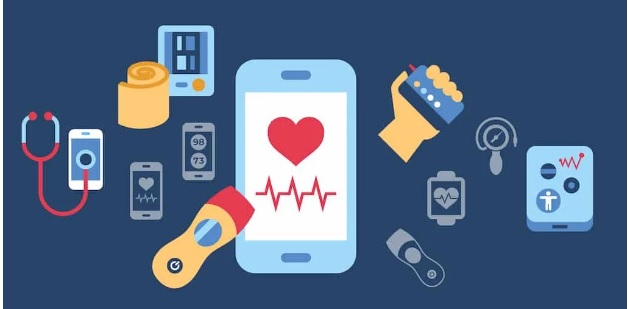
Remote patient monitoring is a good example. Devices like continuous glucose monitors from Dexcom, blood pressure cuffs, and smartwatches send readings to an app, and the care team sees trends between visits. If Nasreen’s numbers climb for three days running, her nurse gets an alert and calls her before a small problem becomes an emergency room visit.
That connection changes the relationship. Patients feel watched over rather than abandoned. Clinicians see real life instead of a single snapshot in an exam room. Family members can be added to a shared view, so a son in London can see that his mother in Lahore took her medication this morning.
Caregivers deserve a mention of their own. Looking after a parent with dementia is exhausting and isolating. Apps with caregiver forums, shared calendars, and respite resources help the people holding everything together.
Mental Health Apps Are Normalizing the Conversation
Few areas show the community effect more clearly than mental health. Apps such as Headspace, Calm, and Talkspace made therapy and mindfulness feel ordinary. Many include group challenges, guided programs, and moderated forums where people share what’s been hard that week.
The World Health Organization has repeatedly flagged that mental health services are stretched thin worldwide, especially in low-income regions. Apps won’t close that gap alone, but they offer a first step. Someone who wouldn’t walk into a therapist’s office might join a chat group on a Thursday night, find out they aren’t the only one struggling, and then book a real appointment.
The risk is obvious. Peer groups can’t replace crisis care, and a bad moderation policy can turn a support space into a harmful one. Responsible apps include clear escalation paths, with crisis hotlines and clinician review for posts that signal danger.
Interoperability: The Quiet Engine Behind Connected Care
Behind every smooth community feature sits a technical foundation most users never see. Standards like HL7 and FHIR let different systems exchange health data safely. Without them, your hospital’s records, your pharmacy’s prescriptions, and your wearable’s readings stay in separate silos.
Apple Health and Google Health Connect now act as hubs where data from many sources comes together. When an app plugs into those hubs and into a hospital’s electronic health record, the patient’s story finally holds together in one place. Their doctor sees what the app sees. Their peer group conversations can be informed by real numbers, if the patient chooses to share them.
This is also where many projects stall. Integrating with legacy hospital systems is slow, expensive, and full of edge cases. Teams that underestimate it end up with a beautiful app that can’t talk to anything.
Privacy, Trust, and Compliance Can’t Be an Afterthought
Health data is the most sensitive information a person owns. A community built on it lives or dies on trust.
In the United States, HIPAA governs how protected health information is stored and shared. In the UK and EU, GDPR adds strict rules around consent and data processing. Pakistan is still developing its data protection framework, but any app serving international patients needs to meet the stricter standards anyway.
Practical safeguards include end-to-end encryption, role-based access so only the right people see the right data, clear consent screens written in plain language, audit logs, and the ability for users to export or delete their information. Community features add another layer: users need control over what appears on a public profile, and moderators need training on confidentiality.
One breach can wipe out years of goodwill. Patients forgive a clunky interface far more easily than a leak.
What It Takes to Build a Patient Community App
Organizations considering their own platform should start with a narrow question: which group of patients are we serving, and what problem do they have today that connection would solve?
A diabetes clinic needs different features from a pediatric hospital or a mental health startup. Still, a few building blocks come up again and again:
- Secure messaging between patients and care teams
- Moderated peer forums or group chats
- Appointment booking and telehealth video
- Medication and symptom tracking with reminders
- Wearable and device integration
- Educational content in multiple languages
- Caregiver access with patient-controlled permissions
- An analytics dashboard for clinicians and administrators
Budget is the second question, and it’s rarely small. Healthcare App Development cost varies widely depending on features, compliance requirements, and integrations. A basic version with messaging and scheduling might land between forty and sixty thousand dollars. A full platform with telehealth, device syncing, EHR integration, and HIPAA-grade infrastructure can climb well beyond two hundred thousand. Ongoing expenses matter too: hosting, security audits, content moderation, and updates as regulations change.
A phased approach usually works best. Launch with one community and one or two core features. Watch how people use it. Add the next layer when real behavior, not guesswork, tells you what’s missing.
Adoption deserves as much planning as engineering. The most polished app fails if clinicians don’t recommend it and patients don’t know it exists. Train staff, put QR codes in waiting rooms, and make the first login painless.
Challenges That Still Need Honest Attention
Connected communities aren’t a cure-all. A few problems keep surfacing.
The digital divide. Older adults, people in rural areas, and those without reliable internet or smartphones get left out. Any serious strategy pairs the app with offline options, such as phone support or clinic-based enrollment.
Misinformation. Peer groups can spread bad advice as quickly as good advice. Moderation, clinician oversight, and links to reliable sources like the CDC and NHS reduce the damage.
Engagement drop-off. Plenty of health apps lose most users within weeks. Communities help, but only when someone actively welcomes newcomers and keeps conversations alive.
Clinician workload. Doctors already drown in messages. If an app dumps unfiltered notifications on their desk, they’ll abandon it. Smart triage and clear boundaries protect their time.
Equity. Apps designed around one population can fail others. Testing with diverse users, in multiple languages, isn’t optional.
Frequently Asked Questions
How do healthcare apps connect patients with each other?
Through condition-specific forums, group chats, moderated support circles, and peer matching tools. Some pair newly diagnosed patients with mentors who’ve lived through the same experience.
Are online patient communities actually helpful?
Research on peer support generally points to better emotional well-being, stronger treatment adherence, and greater confidence in managing a condition. They work best alongside professional care, not instead of it.
Is it safe to share medical information in a health app?
It can be, if the app uses strong encryption, follows regulations like HIPAA or GDPR, and gives you control over visibility. Read the privacy policy and share only what you’re comfortable with.
What is remote patient monitoring?
It’s the use of connected devices and apps to track a patient’s health data outside the clinic, so the care team can spot trends and step in early.
Can healthcare apps replace doctors?
No. They extend care between visits, improve communication, and give patients support. Diagnosis and treatment decisions still belong to qualified clinicians.
What features make a patient community app successful?
Easy onboarding, trusted moderation, strong privacy controls, integration with clinical records, and content that fits the audience’s language and culture.
Final Thoughts
Medicine has always been about relationships, and technology is finally catching up to that idea. The strongest healthcare apps don’t just digitize paperwork. They shrink the distance between a patient and the people who can help: clinicians, caregivers, and others walking the same road.
Nasreen’s glucose numbers improved over the following year, and her doctor was happy about it. But when someone asks what changed her life, she doesn’t mention the readings. She talks about the group chat, and about the Thursday evening a stranger told her, “I felt exactly like that when I started.”
Connection was the treatment nobody wrote on the prescription. Apps are now making it easy to deliver.