Choosing the right corrugated board plays an important role in reliable case packing. Board strength, flute type, sheet size, and folding performance all affect how smoothly packaging equipment forms and seals each case.
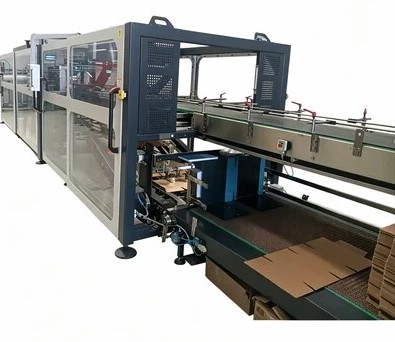
A Wrap Around Case Packer needs corrugated blanks that match both the machine and the products being packed. The right combination helps prevent folding problems, weak case corners, poor adhesive bonding, and unnecessary production interruptions.
Why Corrugated Board Selection Matters
Wrap-around packaging uses a flat corrugated blank that folds around a grouped set of products. The machine depends on controlled folding points to create the required case shape.
A board that folds too easily may not provide enough structural support. A board that resists folding too much may create problems during forming, compression, or sealing.
The goal involves finding a board that provides enough strength while still allowing consistent machine handling.
Key Corrugated Board Factors to Consider
Several board characteristics deserve attention when matching packaging material with equipment.
Board Grade
Board grade determines much of the case’s strength and resistance to crushing. Heavier products generally require stronger corrugated material than lightweight cartons or small consumer packs.
The selected grade should also support the stacking and transportation conditions the finished cases will face.
Flute Type
Flute selection affects thickness, cushioning, compression strength, and folding behavior. Common options include different combinations of liner and medium profiles designed for specific packaging needs.
A thicker board may provide greater protection, while a thinner option can offer easier folding and more efficient material use.
Board Thickness
Thickness affects the way a blank travels through the packaging machine. It also changes the dimensions of folds, panels, and finished cases.
Small changes in board thickness can influence how accurately panels align during forming. Equipment settings may need adjustment when the board specification changes.
Sheet and Blank Dimensions
The corrugated blank must match the required case dimensions and the machine’s forming capabilities. Incorrect blank dimensions can cause panels to overlap incorrectly or leave insufficient material for proper closure.
Accurate blank sizing also helps maintain consistent case appearance across production runs.
Match Board Strength to the Product
The product itself provides an important starting point for board selection. Weight, shape, density, and arrangement all influence the required packaging strength.
For example, a case containing several heavy multipacks may need stronger board than a case holding lightweight cartons. Products with sharp edges may also require additional protection to reduce the risk of board damage.
Consider these factors before selecting the corrugated specification:
- Total product weight per case
- Product dimensions and shape
- Number of products in each case
- Product arrangement inside the package
- Stacking requirements
- Shipping and handling conditions
- Exposure to moisture or temperature changes
Consider the Folding Characteristics
A wrap-around machine relies on predictable folding. The board must bend along intended fold lines without cracking, tearing, or resisting the forming process excessively.
Creasing quality matters here. Proper scores help the machine create clean folds and maintain accurate case geometry.
Poorly defined scores can lead to uneven corners or excessive resistance during forming. The problem may become more noticeable as production speeds increase.
Check Adhesive Compatibility
Corrugated board also needs to work well with the selected sealing method. Many wrap-around packaging systems use hot-melt adhesive to secure folded panels.
The liners, coatings, board surface, and adhesive formulation can all affect bonding performance. A board that does not provide a suitable bonding surface may lead to weak seals or inconsistent case closure.
Testing the actual board and adhesive combination helps identify potential bonding issues before full-scale production.
How Production Speed Affects Board Choice
Production speed can influence the acceptable range of board characteristics. At higher speeds, the machine has less time to handle each blank and complete every folding and sealing movement.
Consistent board quality becomes especially important in these conditions. Variations in thickness, moisture, scoring, or dimensions may create feeding and forming problems.
A board specification that performs well during a slower trial may require additional testing before use on a high-speed production line.
Board Moisture Can Affect Performance
Moisture content can influence corrugated board strength and flexibility. Excess moisture may reduce compression strength, while overly dry material can become more brittle and prone to cracking.
Storage conditions therefore matter as much as the original board specification.
Keep corrugated blanks in a clean, dry environment and protect them from excessive humidity. Consistent storage helps maintain predictable material behavior during production.
Test the Board Before Full Production
Material testing provides a practical way to confirm compatibility between corrugated blanks and packaging equipment.
Rather than relying only on board specifications, run representative samples through the actual production process. Observe how the blanks feed, fold, compress, and seal.
Pay attention to:
- Blank feeding consistency
- Fold accuracy
- Corner formation
- Product positioning
- Adhesive bonding
- Case compression
- Finished case dimensions
- Outfeed stability
Testing becomes even more important when changing board suppliers, grades, flute profiles, or case dimensions.
Work With the Machine Specification
The packaging machine manufacturer’s specifications provide another important reference point. Equipment designers establish operating ranges for materials based on the machine’s feeding and forming mechanisms.
Techflow Pack, for example, can help manufacturers consider the relationship between packaging equipment, product characteristics, and corrugated case requirements when planning an automated packing line.
Manufacturers should provide accurate information about their products and intended case formats when discussing equipment requirements. This allows the packaging system to receive a more suitable material specification from the beginning.
Avoid Choosing Board Based Only on Strength
Higher board strength does not automatically mean better packaging performance. An unnecessarily heavy board can increase material costs and may affect folding or machine handling.
The better approach involves balancing strength, thickness, folding behavior, product protection, and production requirements.
A properly matched board can provide the necessary case performance without adding material that the application does not require.
What Happens When the Board Is Poorly Matched?
Using unsuitable corrugated material can create several production problems.
Common signs include:
- Blanks failing to feed correctly
- Panels folding outside their intended scores
- Crushed or damaged corners
- Cases losing their shape after compression
- Weak adhesive bonds
- Inconsistent finished dimensions
- More frequent machine adjustments
- Increased packaging waste
These problems do not always originate from the packaging machine. The corrugated material itself may contribute to inconsistent results.
A Practical Approach to Board Selection
Start by defining the finished case requirements. Identify the product weight, case dimensions, packing pattern, stacking conditions, and expected production speed.
Next, review suitable corrugated grades and flute options. Compare their strength and folding characteristics with the requirements of the application.
Finally, test the selected material under actual operating conditions. This step helps confirm that the board performs consistently throughout feeding, forming, sealing, and case handling.
Final Thoughts
Matching corrugated board to a wrap-around packaging system requires more than choosing a strong material. Board grade, flute type, thickness, scoring, dimensions, moisture, and adhesive compatibility all influence machine performance.
The best specification balances product protection with reliable folding and efficient material use. Proper testing also reduces the risk of production problems after a new board specification enters regular operation.
Techflow Pack’s packaging solutions can support manufacturers looking to integrate automated case packing with their existing production processes. Selecting compatible corrugated material from the planning stage helps create a more stable and consistent packing operation.