Choosing a manufacturing partner for industrial pumping equipment can have a lasting impact on system performance, maintenance requirements, and operating costs. A suitable partner should offer more than a selection of pumps; it should understand the technical conditions in which the equipment will operate.
When evaluating a gear pump manufacturer, businesses should consider engineering experience, manufacturing consistency, product quality, customization capabilities, and ongoing support. Taking time to assess these factors can help reduce the risk of equipment problems and create a more dependable supply relationship.
Relevant Industry Experience
Experience is one of the first factors worth examining. Manufacturers that have worked with a variety of industrial applications are more likely to understand the differences between common pumping requirements.
Relevant experience may include hydraulic systems, lubrication equipment, chemical processing, fuel transfer, and machinery manufacturing. Experience with similar fluids and operating conditions can be particularly valuable.
Rather than focusing only on how long a company has operated, consider whether its experience is relevant to your specific application.
Strong Engineering Capabilities
A capable manufacturing partner should be able to explain why a particular pump design is suitable for an application. Engineering knowledge is important when selecting pump displacement, materials, seals, pressure ratings, and operating speeds.
Technical support is also useful when standard products do not fully meet system requirements. The manufacturer should be able to evaluate the application and recommend practical modifications when necessary.
Clear engineering communication can prevent misunderstandings and reduce the likelihood of selecting an unsuitable pump.
Consistent Manufacturing Quality
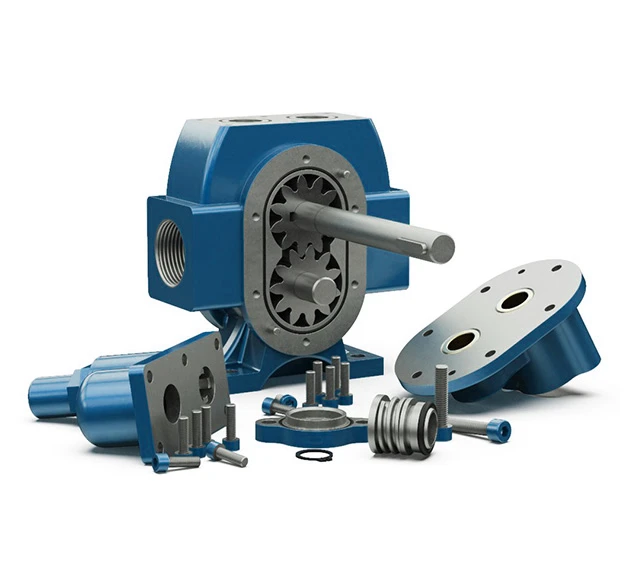
Gear pumps rely on precision components that must work together accurately. Gear profiles, shafts, housings, bearings, and internal clearances can all influence efficiency and service life.
When assessing a manufacturing partner, look for evidence of controlled production processes and consistent inspection procedures. Precision machining and careful assembly are particularly important for maintaining predictable pump performance.
Manufacturing consistency becomes even more important when ordering multiple units or replacement pumps over an extended period.
Effective Quality Control
A reliable manufacturing partner should have defined quality control procedures throughout production. Inspection should not be limited to the final stage of manufacturing.
Quality processes may include:
- Raw material inspection
- Component dimensional checks
- Machining verification
- Assembly inspection
- Pressure testing
- Flow testing
- Leakage checks
These procedures can help identify manufacturing issues before products reach the customer.
Product Selection and Customization
Every industrial system has different requirements. A manufacturing partner should offer enough product flexibility to accommodate standard applications as well as specialized projects.
Customization may involve pump dimensions, displacement, shaft configurations, mounting arrangements, port locations, materials, or sealing systems.
The manufacturer should also be able to explain the advantages and limitations of customized designs instead of recommending modifications without considering their effect on overall pump performance.
Appropriate Material Options
Fluid compatibility should be a major part of pump selection. Different liquids can have very different effects on pump components, particularly when they are corrosive, abrasive, highly viscous, or operated at elevated temperatures.
Ask potential manufacturing partners about available materials for housings, gears, shafts, bearings, and seals. The supplier should be able to explain why particular materials are appropriate for the intended fluid.
Choosing compatible materials can help reduce corrosion, wear, leakage, and premature component replacement.
Reliable Testing Procedures
Testing provides evidence that a finished pump performs according to its intended specifications. The exact testing requirements will depend on the pump design and application.
A manufacturing partner may conduct tests involving pressure, flow, leakage, dimensions, noise, vibration, or operating performance.
It is useful to ask what tests are performed as part of normal production and what additional validation may be available for specialized applications.
Clear Technical Documentation
Good documentation can simplify installation, operation, maintenance, and future replacement. Before choosing a partner, review the technical information provided with its products.
Useful documents may include dimensional drawings, product specifications, performance data, installation instructions, and maintenance recommendations.
Complete documentation also makes it easier for engineering and maintenance teams to verify that the pump is appropriate for the system.
Production Capacity and Lead Times
A manufacturing partner should be able to meet current requirements without creating unnecessary supply delays. This is particularly important for companies that require regular pump orders or replacement units.
Ask about typical production lead times, manufacturing capacity, minimum order requirements, and the ability to support repeat orders.
For long-term projects, consistent availability can be just as important as the performance of the original pump.
Spare Parts and Maintenance Support
A pump’s service life depends partly on how easily it can be inspected, maintained, and repaired. A good manufacturing partner should provide appropriate information about replacement components and maintenance requirements.
Spare parts may include seals, bearings, shafts, gears, or other serviceable components, depending on the pump design.
Reliable access to replacement parts can help reduce downtime and simplify maintenance planning.
Responsive Technical Communication
Communication is often overlooked during supplier selection, but it can become critical when technical questions arise. A manufacturing partner should provide clear and timely responses to questions about specifications, installation, performance, and troubleshooting.
Pay attention to how the supplier communicates before placing an order. Detailed answers and accurate technical information can be positive indicators of the support you may receive later.
Competitive Total Cost
Price matters, but the lowest initial quotation is not necessarily the most economical choice. A pump with a low purchase price may have higher maintenance costs or a shorter service life.
Consider the total cost of ownership, including purchase, installation, maintenance, spare parts, energy consumption, and potential downtime.
A manufacturing partner that provides consistent quality and dependable support may offer greater long-term value even if its initial price is not the lowest.
Ability to Build a Long-Term Relationship
For companies that use gear pumps regularly, finding a dependable long-term manufacturing partner can simplify procurement and maintenance.
A strong relationship can provide benefits such as consistent product specifications, easier repeat ordering, access to technical support, and better understanding of the customer’s equipment requirements.
The ideal partner should be capable of supporting both immediate purchasing needs and future equipment developments.
Conclusion
Finding the right gear pump manufacturing partner requires careful evaluation of more than product price. Industry experience, engineering expertise, manufacturing quality, testing procedures, customization options, material selection, documentation, delivery reliability, and after-sales support all deserve consideration.
By comparing potential partners against the specific needs of the application, businesses can make better purchasing decisions and establish a supply relationship that supports dependable pump performance over time.