Trichloroisocyanuric acid, commonly known as TCCA, is a chlorine-based disinfectant widely used in swimming pool sanitation and selected industrial water treatment applications. Its high available chlorine content makes it a practical option for operations that require effective microbial control. Among the available product forms, granular TCCA is valued for its convenient handling, flexible application options, and suitability for certain controlled dosing processes.
When evaluating TCCA 90 Granular, buyers should look beyond the stated available chlorine content and examine particle size, purity, moisture levels, dissolution behavior, packaging, and batch consistency. These factors influence product handling, storage stability, and application performance. Understanding the relationship between physical characteristics and chemical specifications helps distributors, procurement teams, and industrial users make more informed purchasing decisions.
1. Understanding TCCA 90 Granular
TCCA is an organic chlorine compound that releases available chlorine when it dissolves in water. The term TCCA 90 generally refers to a commercial grade with approximately 90% available chlorine, subject to the manufacturer’s specifications and applicable test methods.
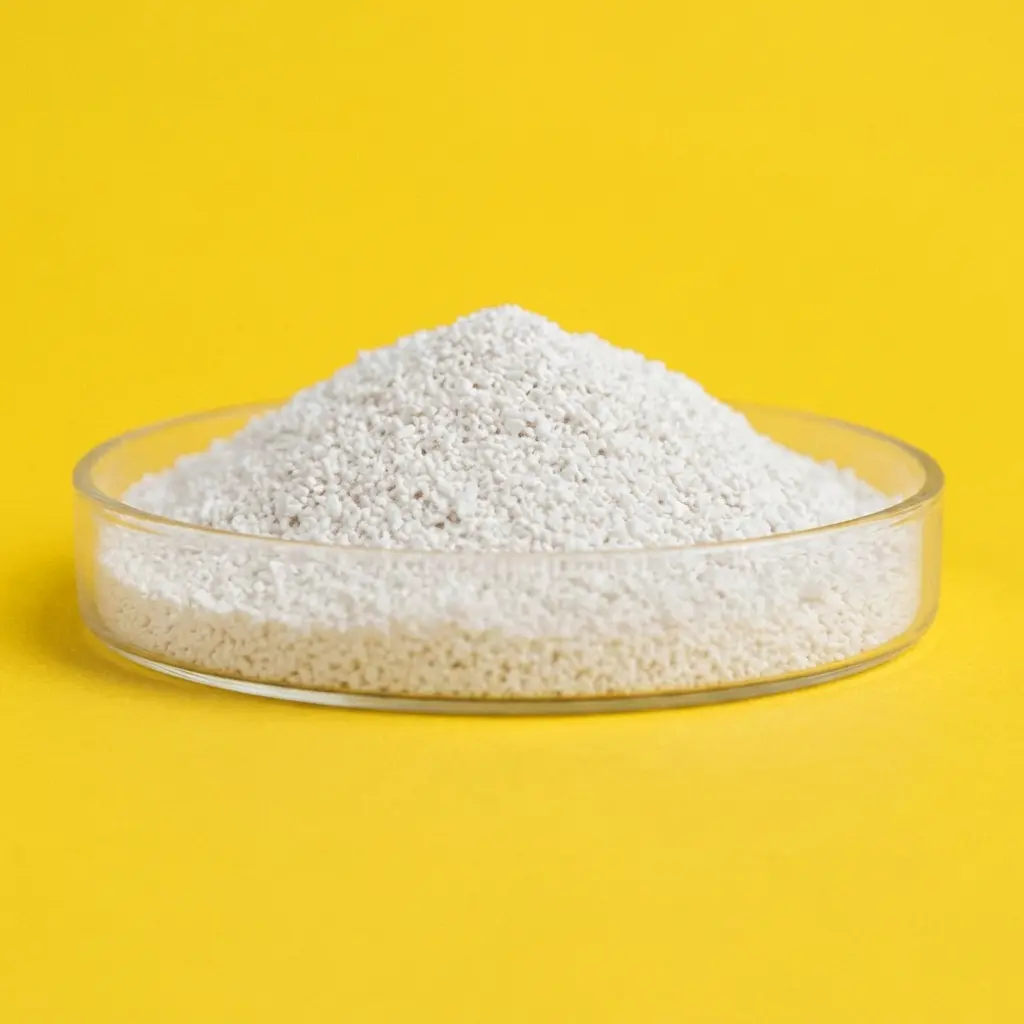
Granular TCCA is supplied as small solid particles rather than compressed tablets or fine powder. This physical form can make it convenient for handling and for use in compatible chemical feeding or preparation systems.
Its main characteristics include:
- High available chlorine content according to the product specification
- Solid granular physical form
- Chlorine-releasing disinfection properties
- Storage and handling requirements associated with oxidizing chemicals
- Dissolution behavior influenced by particle size and water conditions
The exact characteristics should always be confirmed through the product label, technical data sheet, and batch Certificate of Analysis.
2. Why Particle Size Matters in Granular TCCA
Particle size is an important physical property because it can influence how a granular product is handled, measured, transported, and dissolved.
Dissolution Behavior
Smaller particles generally have more surface area relative to their mass, which can influence dissolution speed. Larger granules may dissolve differently depending on their structure, water temperature, and movement.
However, particle size alone does not determine dissolution performance. Formulation, density, manufacturing conditions, and water chemistry also contribute.
Handling and Measurement
Consistent particle size can make a product easier to measure and handle in systems designed for granular chemicals.
Uneven particle sizes may affect flow characteristics and create differences in how material moves through certain feeding arrangements.
Packaging and Transportation
Granules should maintain their physical integrity during packaging, transportation, and storage. Excessive breakage can produce fines and dust, changing the particle-size distribution of the supplied material.
Application Compatibility
The appropriate particle size depends on the intended use and equipment design. Buyers should confirm that the selected grade is compatible with their preparation and dosing procedures.
3. Understanding Purity and Available Chlorine Content
Product purity and available chlorine content are two important quality indicators, but they describe different aspects of the material.
Available Chlorine
Available chlorine indicates the oxidizing capacity of the product under defined testing conditions. TCCA 90 generally refers to a grade with approximately 90% available chlorine.
Buyers should verify the actual specification and the analytical method used by the manufacturer rather than relying only on the commercial product name.
Chemical Purity
Purity describes the composition of the product and the level of relevant impurities. It can influence product consistency and suitability for particular applications.
A reliable supplier should provide clear specifications and batch documentation.
Moisture Content
Moisture is an important quality consideration for solid TCCA products. Exposure to unsuitable storage conditions can affect physical quality and stability.
Buyers should review the manufacturer’s moisture specification and ensure that packaging protects the product from humidity.
Insoluble Matter
Insoluble material may influence preparation and handling in some treatment systems. Where relevant, buyers should review the product’s insoluble matter specification and determine whether it meets application requirements.
4. Physical Characteristics Buyers Should Evaluate
Granular TCCA quality involves more than chemical composition. Physical characteristics can influence the overall user experience and suitability for industrial handling.
Particle Uniformity
A consistent particle-size distribution supports predictable handling and measurement. Buyers should request information about the manufacturer’s particle-size specifications where these characteristics are important.
Granule Strength
Granules should be sufficiently stable to withstand normal packaging and transportation. Excessive fragmentation can increase dust formation and change the physical characteristics of the material.
Appearance
Commercial TCCA granules are generally supplied as a white solid. Significant changes in appearance, unusual contamination, or unexpected physical deterioration should be investigated before use.
Packaging Integrity
Packaging should prevent moisture exposure and protect the product from contamination during storage and transport.
The package should also carry appropriate product identification, batch information, safety warnings, and handling instructions.
5. Industrial Applications of TCCA 90 Granular
TCCA granular formulations are used in selected applications where chlorine-based disinfection is required. Product approval and application suitability must be confirmed before use.
Swimming Pool Water Treatment
TCCA is widely used in swimming pool sanitation because it releases available chlorine that helps control susceptible microorganisms.
Granular products may be considered for compatible pool treatment procedures. Operators should monitor free chlorine, pH, and cyanuric acid where relevant, following product instructions and applicable pool standards.
Industrial Water Treatment
Some industrial facilities use chlorine-based disinfectants to manage microbial contamination in selected water systems.
TCCA may be suitable for particular applications where the product is compatible with the water chemistry, equipment, and treatment program.
Surface and Equipment Sanitation
Certain approved TCCA formulations may be used for sanitation of surfaces and equipment. The permitted application, preparation method, contact conditions, and rinsing requirements must follow the product label.
Wastewater Disinfection
TCCA may be considered in selected wastewater disinfection processes when permitted by applicable regulations and supported by an appropriate treatment design.
Organic loading, suspended solids, disinfectant demand, and residual management should be assessed before application.
Aquaculture Facility Sanitation
Chlorine-based products may be used for specific sanitation procedures involving empty tanks, equipment, and facilities between production cycles.
TCCA should not be added to occupied fish or shrimp systems unless a specific authorized protocol establishes its suitability and safeguards. Chlorine residuals can be harmful to aquatic organisms.
6. Factors Affecting Granular TCCA Dissolution
Dissolution behavior is important when choosing a granular product for a particular treatment system.
Several factors can influence how TCCA granules dissolve:
- Particle size: Smaller particles generally offer more surface area relative to their mass.
- Water temperature: Temperature can affect dissolution and chemical reaction rates.
- Water movement: Circulation and mixing influence contact between the granules and water.
- Formulation: Manufacturing methods and physical structure can affect dissolution characteristics.
- Water chemistry: The composition of the water may influence treatment behavior and chemical demand.
Buyers should request product-specific technical information rather than assuming that all granular TCCA grades dissolve at the same rate.
7. Quality Documentation to Request From Suppliers
Documentation helps buyers verify whether a supplied product meets the agreed quality requirements.
Certificate of Analysis
A Certificate of Analysis provides batch-specific test results. It may include available chlorine content, moisture, and other relevant product specifications.
Technical Data Sheet
The technical data sheet describes the product’s chemical and physical characteristics, intended applications, and handling information.
Safety Data Sheet
The Safety Data Sheet identifies hazards, protective equipment, storage conditions, handling precautions, and emergency response measures.
Product Specification
A product specification should clearly identify the required available chlorine content, physical form, particle-size characteristics where applicable, and relevant quality limits.
Batch Traceability
Batch numbers and production information help buyers connect supplied material with its quality documentation. Traceability is especially important for distributors and industrial users managing multiple deliveries.
8. Safe Storage and Handling of TCCA 90 Granular
TCCA is an oxidizing chemical. Its storage and handling require appropriate controls to reduce the risk of contamination, decomposition, and hazardous reactions.
Recommended precautions include:
- Read the product label and Safety Data Sheet before handling.
- Wear suitable gloves, eye protection, and other specified personal protective equipment.
- Keep the product in its original, tightly sealed packaging.
- Store it in a cool, dry, and well-ventilated area.
- Protect it from moisture, heat, and direct contamination.
- Keep it separate from acids, ammonia, oils, reducing agents, and combustible materials.
- Never mix TCCA with other pool chemicals or cleaning products.
- Use clean, dry equipment suitable for oxidizing chemicals.
- Train workers in safe handling and emergency response procedures.
If packaging is damaged or the product shows signs of unexpected deterioration, follow the manufacturer’s safety guidance before handling it further.
9. Common Purchasing Mistakes to Avoid
Buyers can reduce quality and operational problems by reviewing the full product specification rather than focusing on price alone.
Choosing only by available chlorine: A high available chlorine specification does not guarantee consistent particle size, purity, or packaging quality.
Ignoring particle-size distribution: Inconsistent granules may create handling or feeding problems in systems designed for particular material characteristics.
Overlooking moisture content: Moisture exposure can affect storage stability and physical quality.
Failing to request batch documentation: Without a Certificate of Analysis, buyers have less information for verifying supplied product quality.
Assuming all applications are interchangeable: A product suitable for pool treatment may not be approved for drinking water or another regulated use.
Ignoring supplier consistency: Reliable long-term supply requires consistent manufacturing standards and dependable quality control.
Neglecting storage conditions: Even a high-quality product can deteriorate if it is stored incorrectly.
10. How to Select a Reliable TCCA 90 Granular Supplier
Supplier evaluation should consider product quality, documentation, manufacturing consistency, and supply reliability.
Before purchasing, buyers should assess:
- Available chlorine content and the supporting test method.
- Purity and relevant impurity specifications.
- Particle-size distribution and physical uniformity.
- Moisture content and storage stability.
- Certificate of Analysis for individual batches.
- Technical and safety documentation.
- Packaging quality and transportation protection.
- Manufacturing quality control procedures.
- Regulatory suitability for the intended application.
- Ability to provide consistent quantities and technical support.
A dependable supplier should provide transparent specifications and answer questions about product characteristics, storage, and application limitations.
Conclusion
TCCA 90 granular is a high-available-chlorine product used in selected swimming pool, industrial water treatment, and sanitation applications. Its overall quality depends on chemical specifications as well as physical characteristics such as particle size, moisture content, granule uniformity, and dissolution behavior.
For buyers, evaluating these factors alongside batch documentation, packaging quality, and supplier reliability can help reduce purchasing risks. Careful product selection and appropriate storage and handling practices support consistent performance and safer use across suitable industrial applications.