
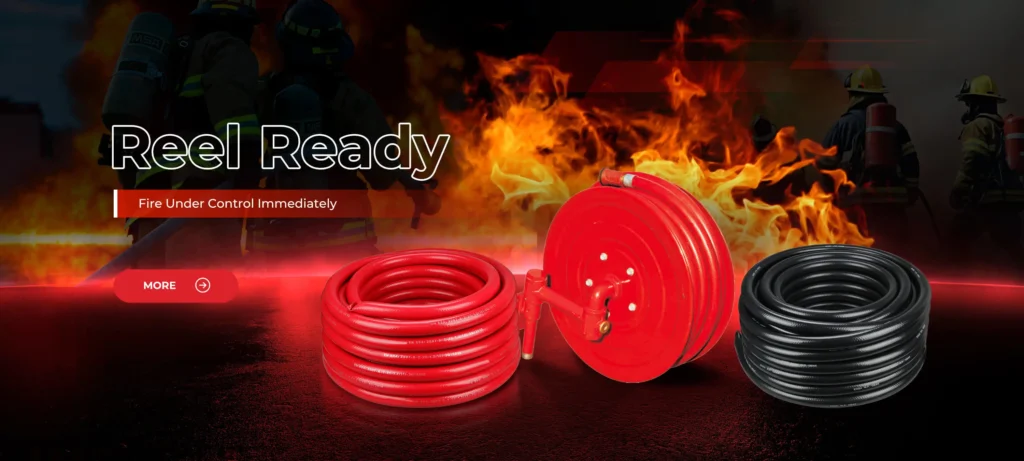
Firefighting equipment must withstand demanding operating conditions while remaining dependable during emergencies. Hoses are particularly important because they transport water or other approved extinguishing agents from a supply source to the discharge point. Their material composition influences flexibility, pressure resistance, durability, and service life. Among the materials used in hose manufacturing, ethylene propylene diene monomer (EPDM) rubber is valued for its resistance to weathering, heat, and environmental exposure. Understanding its properties helps buyers assess whether it is suitable for their fire protection requirements.
An Epdm Rubber Fire Hose is a firefighting hose that uses EPDM rubber in its construction, commonly as an inner lining or protective layer. EPDM is a synthetic elastomer known for its resistance to ozone, sunlight, moisture, and many environmental conditions. Depending on the product design, it may be combined with textile reinforcement and other protective materials to provide the strength and flexibility required for water delivery. Its suitability depends on the complete hose construction rather than the rubber compound alone.
Understanding EPDM Rubber and Its Properties
EPDM is widely used in industrial sealing, automotive components, and fluid-handling applications because of its useful physical and chemical characteristics. In firefighting hoses, these properties can contribute to dependable performance when the material is correctly selected and manufactured.
1. Weather and Ozone Resistance
One of EPDM’s major advantages is its resistance to outdoor exposure. Sunlight, ozone, and changing weather conditions can cause some rubber materials to deteriorate over time. EPDM generally performs well against these influences, making it useful in applications where hoses may be stored or operated outdoors.
2. Heat Resistance
EPDM can maintain useful physical properties across a range of temperatures, depending on the formulation. This characteristic supports its use in environments exposed to changing temperatures. However, it should not be assumed that every EPDM hose is suitable for direct flame contact or extreme heat. The manufacturer’s temperature limits must always be observed.
3. Flexibility and Elasticity
Rubber flexibility helps firefighting personnel handle, position, and deploy hoses during operations. EPDM formulations can provide good elasticity, allowing the material to accommodate normal bending and movement. Actual flexibility also depends on reinforcement, wall thickness, hose diameter, and manufacturing methods.
4. Water and Chemical Resistance
EPDM generally offers good resistance to water and many dilute acids and alkalis. It is not universally resistant to all chemicals, oils, or fuels. Compatibility must therefore be confirmed before using an EPDM hose with any agent other than the fluids specified by its manufacturer.
Construction of EPDM Rubber Fire Hoses
A firefighting hose commonly consists of several components that work together to provide strength, fluid containment, and external protection.
- Inner lining: The EPDM rubber lining provides a passage for water or another approved extinguishing agent.
- Reinforcement layer: Woven synthetic fibers or other reinforcing materials help the hose withstand internal operating pressure.
- Outer cover: A protective layer helps resist abrasion, moisture, dirt, and environmental damage.
- Couplings and fittings: Compatible connectors allow the hose to attach securely to hydrants, pumps, nozzles, or other firefighting equipment.
The quality and compatibility of these components determine the performance of the finished product. A suitable rubber compound cannot compensate for inadequate reinforcement or poorly manufactured connections.
Key Benefits of EPDM Rubber Fire Hoses
EPDM construction can provide several advantages when matched to the intended application.
Durability in outdoor environments: Resistance to ozone, sunlight, and weathering can help reduce deterioration during storage and use.
Resistance to moisture: EPDM’s water resistance supports applications involving regular water exposure and wet operating conditions.
Useful flexibility: Suitable formulations can make hoses easier to handle, roll, position, and deploy.
Long-term material stability: Resistance to several common environmental influences may help preserve material properties over an appropriate service period.
Versatile applications: EPDM can be incorporated into different hose designs for selected firefighting and industrial water-transfer requirements.
These benefits depend on product quality, operating conditions, correct storage, and maintenance. They should not be treated as guarantees of a particular service life.
Applications Across Different Environments
EPDM rubber fire hoses may be used in various settings where their specifications match the system requirements.
Commercial Buildings
Commercial properties may use suitable hoses as part of internal firefighting arrangements, hose reels, or other approved water delivery systems. Material selection should reflect the installation environment and applicable fire safety requirements.
Industrial Facilities
Factories and processing plants often require hoses that can tolerate regular handling and environmental exposure. EPDM-based products may be appropriate for selected water delivery applications, provided their pressure and fluid compatibility ratings meet operational needs.
Outdoor Fire Protection
Outdoor installations can expose hoses to sunlight, rain, temperature changes, and surface abrasion. EPDM’s weather resistance can be beneficial in these conditions, although protective storage remains important.
Municipal and Emergency Services
Fire and emergency response organizations may evaluate EPDM-based hoses for suitable applications based on flexibility, pressure ratings, connection standards, and handling requirements.
Factors to Consider When Selecting an EPDM Fire Hose
Before purchasing, review the hose’s technical specifications and intended use. Important considerations include:
- Working pressure: Confirm that the rating matches the operating requirements of the pump or water supply.
- Diameter and length: Select dimensions that support the required flow and deployment distance.
- Reinforcement quality: Check the construction used to provide pressure resistance and dimensional stability.
- Temperature limits: Verify that the material is suitable for expected operating and storage temperatures.
- Connection compatibility: Ensure couplings and fittings match the installed firefighting equipment.
- Applicable standards: Review relevant product standards, testing documentation, and local regulatory requirements.
Maintenance and Long-Term Performance
Regular inspection is essential for preserving hose reliability. Examine the lining and outer cover for cracks, cuts, bulges, abrasion, and signs of deterioration. Check couplings for corrosion, deformation, and loose connections. Hoses should be cleaned, dried, and stored according to manufacturer instructions, away from excessive heat, direct sunlight, sharp objects, and incompatible chemicals.
Pressure testing and professional servicing should follow applicable standards and manufacturer guidance. Any hose showing significant damage or failing inspection should be removed from service until assessed by qualified personnel.
Conclusion
EPDM rubber offers useful resistance to weathering, moisture, ozone, and changing environmental conditions, making it a valuable material in selected firefighting hose designs. However, long-term performance depends on reinforcement quality, pressure ratings, connection compatibility, and proper maintenance. Evaluating these factors helps organizations choose suitable EPDM rubber fire hoses and maintain dependable fire protection equipment.
