Industrial packaging operations require reliable equipment that can handle demanding production schedules while maintaining consistent carton quality. As manufacturing facilities expand, manual carton preparation often becomes less practical because it requires continuous labor and can slow down packaging workflows. Automated carton forming equipment offers a more efficient approach by handling repetitive box assembly operations with greater consistency.
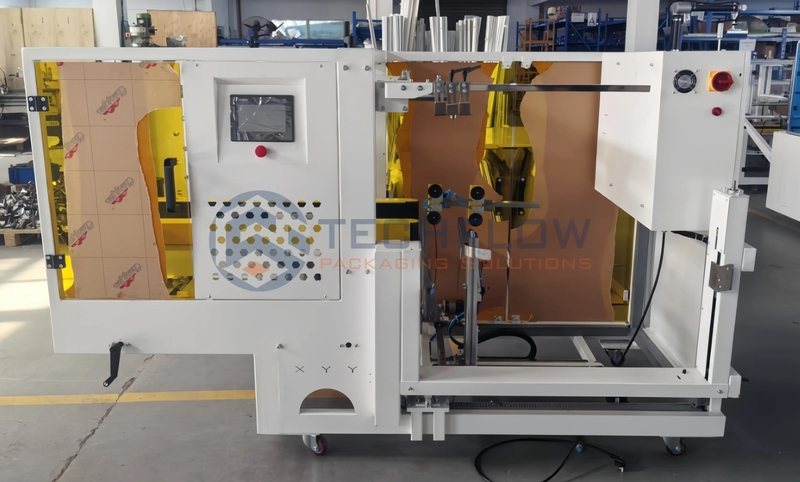
An Automatic Case Erector is designed to transform flat corrugated carton blanks into properly formed cases through automated feeding, opening, folding, and sealing processes. However, industrial machines differ in their capabilities, construction, operating speed, and control systems. Understanding the important features before purchasing equipment helps manufacturers select a solution that matches their production requirements and long-term operational goals.
1. High-Speed Carton Forming Capability
Production speed is one of the first features manufacturers should evaluate when selecting industrial carton erection equipment. The machine must prepare cartons quickly enough to support the output of the entire packaging line.
An industrial case erector should provide a consistent operating cycle that includes carton feeding, opening, bottom flap folding, and sealing.
When evaluating production capacity, consider:
- Maximum cartons processed per minute.
- Actual operating speed under normal production conditions.
- Compatibility with downstream packaging equipment.
- Performance during extended production shifts.
- Time required for carton replenishment and machine adjustments.
Rather than choosing equipment based only on its advertised maximum speed, manufacturers should compare its practical output with their daily production requirements.
2. Wide Carton Size Compatibility
Different products require different carton dimensions. An industrial case erector should accommodate the box sizes used in the facility without requiring unnecessary equipment modifications.
Important specifications include minimum and maximum carton length, width, and height. Manufacturers should also check whether the machine supports different carton styles and corrugated board thicknesses.
Equipment with adjustable guides and forming components can provide greater flexibility when production involves multiple packaging formats.
Before purchasing, it is advisable to provide actual carton samples to the equipment supplier for compatibility testing.
3. Reliable Automatic Carton Feeding System
The feeding mechanism plays an important role in maintaining continuous machine operation. It must separate individual flat carton blanks and transfer them accurately into the forming section.
Many industrial machines use vacuum suction cups or mechanical gripping systems for carton picking and feeding.
A reliable feeding system should offer:
- Consistent separation of individual carton blanks.
- Accurate positioning before carton opening.
- Reduced risk of double feeding.
- Stable performance with compatible carton materials.
- Easy access for cleaning and inspection.
An effective feeding mechanism helps minimize interruptions caused by misfeeds and supports consistent carton preparation.
4. Accurate Carton Opening Mechanism
After feeding, the machine must expand each flat blank into its intended three-dimensional shape. This operation requires proper alignment of the carton panels and controlled mechanical movement.
An effective opening mechanism helps ensure that cartons are correctly shaped before the bottom flaps are folded.
Vacuum-based opening systems and mechanical forming components are commonly used in industrial equipment. The appropriate design depends on carton specifications and machine configuration.
Manufacturers should pay attention to opening accuracy because poorly formed cartons can create difficulties during flap folding, sealing, and automatic product loading.
5. Efficient Bottom Flap Folding System
Bottom flap folding is another essential feature because it determines how accurately the carton base is assembled.
Industrial case erectors use mechanical guides and folding components to move the flaps into the correct positions. The smaller flaps are generally folded before the larger ones, creating a properly aligned base.
When comparing machines, evaluate the precision of the folding mechanism, its compatibility with different carton designs, and the ease of adjustment.
Consistent flap positioning helps create stable cartons that can move smoothly through subsequent packaging stages.
6. Dependable Carton Sealing Technology
Once the carton bottom has been formed, it must be secured before product loading. Industrial case erectors generally use tape or hot-melt adhesive systems, depending on their design.
Tape Sealing System
Tape-based sealing systems apply adhesive tape across the bottom flaps. They are commonly used because of their straightforward operation and relatively simple maintenance requirements.
Manufacturers should consider tape width, adhesive compatibility, application accuracy, and replacement costs.
Hot-Melt Adhesive System
Hot-melt systems use heated adhesive to secure carton flaps. When properly matched with the carton material, this method can provide a strong and reliable bond.
Important considerations include adhesive consumption, temperature control, cleaning requirements, and maintenance procedures.
The right sealing technology depends on the packaging application, carton material, and desired closure characteristics.
7. Strong Industrial Construction
Industrial packaging equipment must withstand regular operation in demanding production environments. Machine construction therefore has a direct influence on durability and long-term reliability.
When evaluating equipment, examine the frame structure, mechanical assemblies, moving components, and overall build quality.
A well-constructed machine should provide stable operation while allowing convenient access to components that require inspection or servicing.
Manufacturers should also consider the working environment, including temperature, humidity, dust exposure, and available floor space.
8. Advanced Control System and User-Friendly Interface
Modern industrial case erectors use automated control systems to coordinate feeding, carton opening, folding, and sealing operations.
Programmable logic controllers (PLCs) are commonly used to manage machine sequences and process information from sensors.
A suitable control system may include:
- An easy-to-understand operator interface.
- Adjustable operating parameters.
- Carton position detection.
- Fault alarms and diagnostic information.
- Machine status monitoring.
- Emergency stop functionality.
A user-friendly interface makes daily operation easier and helps employees identify problems without unnecessary delays.
9. Integrated Safety Features
Safety should be a major consideration when purchasing industrial packaging equipment. Automated machines contain moving mechanisms that can create hazards if appropriate protective measures are not installed.
Important safety features may include protective guards, emergency stop buttons, safety interlocks, and clearly identified operating controls.
Manufacturers should verify that the equipment meets applicable industrial safety requirements and that operators receive proper training.
Regular safety inspections and established operating procedures are also essential for maintaining a safe production environment.
10. Easy Maintenance and Component Accessibility
Maintenance requirements can significantly influence equipment availability and operating costs.
Industrial case erectors should be designed so that routine inspection, cleaning, and component replacement can be performed efficiently.
Before selecting a machine, check the accessibility of important parts such as:
- Vacuum suction cups and feeding components.
- Folding guides and mechanical assemblies.
- Conveyor belts and drive components.
- Sensors and electrical connections.
- Tape heads or adhesive dispensing systems.
It is also important to confirm the availability of replacement parts and technical assistance from the supplier.
11. Seamless Integration with Existing Packaging Lines
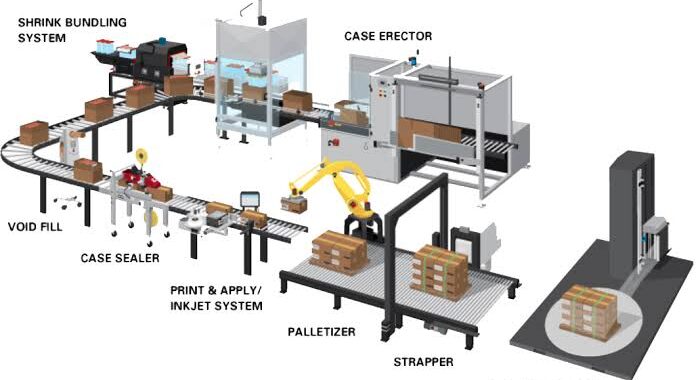
An industrial case erector is often connected to other packaging machines to create an automated production system.
After cartons are formed, conveyor systems can transfer them to automatic case packers for product loading. Filled cartons then move to case sealing, labeling, and palletizing equipment.
For effective integration, manufacturers should evaluate conveyor height, transfer direction, operating speed, carton dimensions, and communication requirements between machines.
Proper synchronization reduces unnecessary handling and helps maintain a continuous packaging workflow.
12. Energy Efficiency and Operating Costs
Energy consumption is another important factor when comparing industrial packaging equipment. Machines operate through motors, vacuum systems, electrical controls, and other components that contribute to overall energy use.
Manufacturers should review the equipment’s power requirements and expected consumption under normal operating conditions.
Other ongoing expenses should also be considered, including:
- Electricity consumption.
- Tape and adhesive materials.
- Replacement components.
- Preventive maintenance.
- Operator training.
- Installation and servicing.
Evaluating these expenses provides a clearer picture of the machine’s total cost of ownership.
13. Flexible Changeover Capabilities
Manufacturing facilities that process multiple product types may need to switch between different carton sizes regularly.
A machine with practical adjustment and changeover features can reduce the time required to prepare for different packaging formats.
Manufacturers should ask how carton size changes are performed, whether tools are required, and how long typical changeovers take.
This feature is particularly valuable for facilities with varied product ranges or changing packaging schedules.
How to Choose the Right Industrial Case Erector
Identifying the right machine requires comparing technical specifications with actual production requirements. A machine with numerous advanced features may not necessarily be the best choice if its capabilities exceed the needs of the facility.
A practical selection process should include the following steps:
- Determine the required carton output per minute and per production shift.
- Identify all carton dimensions and materials used in the facility.
- Evaluate the preferred bottom sealing method.
- Check available installation space and conveyor arrangements.
- Review automation, safety, and control features.
- Compare maintenance requirements and spare parts availability.
- Confirm technical support and integration capabilities.
- Calculate expected operating costs over the equipment’s service life.
This approach helps manufacturers focus on features that directly contribute to production efficiency and operational reliability.
Conclusion
Selecting an industrial automatic case erector involves more than comparing machine speed or purchase price. Manufacturers should carefully evaluate carton compatibility, feeding accuracy, opening and folding mechanisms, sealing technology, construction quality, and automation features.
Control systems, safety measures, maintenance accessibility, and integration capabilities are equally important for achieving reliable long-term performance.
By selecting equipment that matches their production requirements, manufacturers can improve carton preparation, reduce repetitive manual operations, and maintain a consistent packaging workflow. A well-planned equipment investment can also provide the flexibility needed to support changing production demands and future manufacturing growth.