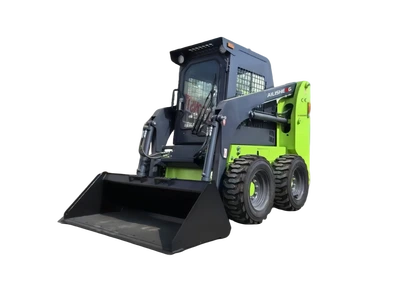
An electric skid loader is a compact, battery-powered machine designed to handle materials, move loads, clear debris, and perform a wide range of tasks in construction, agriculture, landscaping, and industrial facilities. Unlike conventional diesel-powered skid loaders, electric models use rechargeable batteries and electric motors to power machine movement and working functions. Their compact design, maneuverability, and reduced local emissions make them an appealing option for businesses seeking efficient equipment for indoor and outdoor applications.
As more industries explore alternatives to traditional heavy machinery, understanding how an Electric Skid Loader works can help buyers determine whether it suits their operational needs. Factors such as battery capacity, lifting performance, charging time, attachment compatibility, and maintenance requirements all influence the machine’s overall value. Evaluating these features before purchasing helps businesses select equipment that delivers practical performance while meeting site-specific requirements.
What Is an Electric Skid Loader?
An electric skid loader is a small, versatile loader powered primarily by electricity stored in a rechargeable battery pack. It uses electric motors and a hydraulic system, or other model-specific drive arrangements, to move the machine and operate its lifting equipment.
Like traditional skid loaders, electric models are designed to work in confined spaces where larger machinery may be difficult to maneuver. Their skid-steering mechanism allows the wheels or tracks on each side to operate at different speeds, helping the machine turn within a limited area.
Electric skid loaders are available in different sizes and configurations. Some are designed for light material handling and indoor work, while others offer greater lifting capacity for construction, landscaping, and agricultural tasks. Buyers should compare individual specifications rather than assume all electric models provide the same performance.
Key Features of an Electric Skid Loader
1. Battery-Powered Operation
The battery pack supplies energy to the machine’s electric powertrain. Battery capacity, usually measured in kilowatt-hours (kWh), affects how much energy is available for work between charging sessions.
Actual runtime depends on several factors, including load weight, terrain, operating temperature, travel distance, hydraulic demand, and operator behavior. Buyers should review realistic runtime estimates from the manufacturer and consider whether the machine can complete a typical shift without unnecessary interruptions.
2. Electric Motors and Drive Systems
Electric motors convert stored electrical energy into mechanical power. Depending on the design, separate motors or integrated systems may control travel and working functions.
Electric drive systems can provide responsive control and eliminate certain engine-related maintenance tasks. However, performance varies by model, so it is important to evaluate motor output alongside traction, rated operating capacity, and the machine’s ability to perform repeated work cycles.
3. Compact Design and Maneuverability
One of the defining features of a skid loader is its ability to operate in tight spaces. Compact dimensions and skid steering allow operators to maneuver around obstacles, navigate narrow access routes, and work in areas with limited turning space.
This design is useful in warehouses, construction sites, landscaping projects, and agricultural facilities. Before purchasing, measure doorways, aisles, loading zones, and other restricted areas to ensure the selected machine can access the intended work locations.
4. Hydraulic Lifting and Attachment Systems
Many electric skid loaders use hydraulic systems to raise and lower lift arms, tilt buckets, and power compatible attachments. Hydraulic performance depends on factors such as system pressure, flow rate, and the machine’s design.
Common attachments include buckets, pallet forks, grapples, augers, sweepers, and grading tools. Buyers should verify attachment mounting compatibility and confirm that auxiliary hydraulic specifications meet the requirements of their preferred equipment.
5. Operator Controls and Safety Systems
Modern skid loaders may include ergonomic controls, operator displays, protective structures, warning systems, and safety interlocks. These features help operators monitor machine status and work more confidently.
Useful display information may include battery charge, operating warnings, and system diagnostics. Available safety features differ between models, so buyers should review the operator’s manual and confirm that the machine meets the requirements of the intended workplace.
How Does an Electric Skid Loader Work?
An electric skid loader stores energy in its battery pack and uses that energy to operate its drive and working systems. When the operator activates the controls, the machine’s electrical control system manages power delivery according to the requested movement or function.
The process generally involves four main steps:
- Energy storage: The battery stores electrical energy supplied through a compatible charging system.
- Power delivery: Electric motors convert electrical energy into mechanical power for travel or other functions.
- Material handling: The operator uses the lift arms, bucket, or compatible attachment to move materials.
- Recharging: The battery is connected to the approved charging equipment when its remaining energy is insufficient for the next work period.
The exact configuration depends on the manufacturer and model. For example, hydraulic components may be driven by dedicated electric motors, while travel systems may use a different arrangement. Buyers should consult the technical specifications to understand how a particular machine operates.
Common Functions of an Electric Skid Loader
Material Handling
Electric skid loaders can move soil, gravel, sand, construction supplies, packaged goods, and other materials within their rated capacity. A suitable bucket or fork attachment can improve efficiency in loading, unloading, and relocating materials.
Construction and Site Preparation
On construction sites, these machines can help clear debris, move aggregate, distribute materials, and prepare work areas. Their compact dimensions are especially useful on smaller sites where space is limited.
The machine must still be matched to the required workload. Heavy materials, uneven terrain, and steep slopes may require a model with appropriate capacity, traction, and stability.
Warehouse and Industrial Operations
Electric skid loaders can be useful in industrial environments where reduced local exhaust emissions and lower operating noise are valuable. Depending on the machine’s size and the facility’s requirements, they may assist with material movement, cleanup, and other support tasks.
Before indoor use, operators should verify the equipment’s suitability for the floor surface, available clearance, ventilation conditions, and charging arrangements.
Agriculture and Landscaping
Agricultural and landscaping operations can use skid loaders for moving feed, handling soil, transporting supplies, clearing vegetation, and maintaining outdoor spaces. Compatible attachments expand the machine’s usefulness across seasonal tasks.
For outdoor work, buyers should consider ground conditions, traction, weather exposure, battery performance, and the availability of charging facilities.
Cleaning and Maintenance
With suitable attachments, an electric skid loader can assist with sweeping, debris collection, and general site cleanup. This can be valuable for industrial yards, commercial properties, and construction areas that require regular maintenance.
Attachment selection should reflect the material being handled and the machine’s hydraulic capabilities.
Benefits of Using an Electric Skid Loader
1. Reduced Local Emissions
Battery-powered operation produces no tailpipe exhaust emissions while the machine is working. This can be an important advantage for indoor facilities, enclosed work areas, and locations where local exhaust emissions are a concern.
The machine’s overall environmental impact still depends on factors such as electricity generation, battery manufacturing, and equipment lifespan.
2. Lower Operating Noise
Electric powertrains can operate more quietly than many diesel engines. Reduced engine noise may improve communication on job sites and make the equipment more suitable for noise-sensitive locations.
However, electric skid loaders are not silent. Hydraulic pumps, tires, attachments, warning alarms, and contact with materials can still generate considerable noise.
3. Potentially Lower Routine Maintenance
Electric models do not require several maintenance tasks associated with diesel engines, such as engine oil and oil-filter changes. Depending on the design, they may also have fewer engine-related components requiring regular servicing.
Routine maintenance remains essential. Batteries, electrical connections, hydraulic systems, cooling components, brakes, tires, and other parts must be inspected according to the manufacturer’s schedule.
4. Efficient Operation in Suitable Applications
Electric skid loaders can be cost-effective when their energy use, charging schedule, and maintenance needs align with the workload. Businesses with predictable operating hours and convenient charging access may find it easier to integrate battery-powered equipment into daily operations.
Actual savings depend on electricity rates, machine utilization, maintenance expenses, battery replacement costs, and the purchase price.
5. Versatility Across Different Tasks
A skid loader’s attachment compatibility allows one machine to perform a variety of jobs. Instead of relying on separate equipment for every task, operators may use the same loader with different compatible attachments.
This versatility can improve equipment utilization, provided the machine has sufficient capacity and hydraulic performance for each application.
Electric Skid Loader vs. Diesel Skid Loader
Both electric and diesel skid loaders can perform material-handling and site-support tasks, but they differ in power source, maintenance requirements, and operating considerations.
| Feature | Electric Skid Loader | Diesel Skid Loader |
|---|---|---|
| Power source | Rechargeable battery | Diesel fuel |
| Local exhaust emissions | No tailpipe exhaust during operation | Produces engine exhaust |
| Operating noise | Generally quieter powertrain | Generally louder engine |
| Refueling or charging | Requires charging time and suitable electrical access | Requires fuel availability and refueling |
| Engine maintenance | No diesel engine oil or filter changes | Requires engine-related servicing |
| Best-fit applications | Suitable indoor work and selected outdoor tasks | Applications needing established refueling logistics and sustained heavy-duty operation |
| Operating costs | Depend on electricity, charging, maintenance, and battery life | Depend on fuel, maintenance, and machine utilization |
Neither power source is ideal for every situation. Electric models may be attractive where charging is practical and local emissions or noise are important considerations. Diesel models may remain suitable where long operating periods, rapid refueling, or existing fuel infrastructure better match the job requirements.
A fair comparison should use equivalent workloads, operating hours, machine capacities, and ownership periods.
What to Consider Before Buying an Electric Skid Loader
Choosing the right model involves more than comparing purchase prices. Buyers should evaluate the following factors before making a decision.
Battery Capacity and Runtime
Estimate the number of hours the machine must operate each day. Request runtime figures under workloads similar to the intended application, and consider how temperature, heavy lifting, and continuous hydraulic use may affect energy consumption.
Charging Time and Electrical Supply
Check charger compatibility, charging duration, power requirements, and installation costs. Businesses operating several shifts should determine whether charging can fit into scheduled breaks or overnight periods.
Rated Operating Capacity
Review the rated operating capacity, tipping load, lift height, and machine weight. Select equipment that can safely handle routine loads while complying with the manufacturer’s limits.
Hydraulic Flow and Attachment Compatibility
Make sure the machine supports the attachments needed for daily work. Compare auxiliary hydraulic flow and pressure requirements, mounting systems, and attachment weights.
Dimensions and Terrain
Confirm that the loader can access the work area and operate safely on the site’s surfaces. Consider turning space, ground clearance, slopes, traction, and transport requirements.
Warranty and After-Sales Support
Review the warranty for the battery, motors, charger, and other major components. Also confirm the availability of spare parts, qualified technicians, technical assistance, and maintenance documentation.
Total Cost of Ownership
Consider the purchase price alongside electricity consumption, charger installation, maintenance, repairs, potential battery replacement, downtime, and resale value. This provides a more realistic view of long-term value than the initial price alone.
Is an Electric Skid Loader Right for Your Business?
An electric skid loader may be a good fit for businesses that need compact, versatile equipment and can provide reliable charging access. It can be particularly useful in warehouses, industrial facilities, urban construction sites, landscaping operations, and agricultural environments where reduced local exhaust emissions or quieter operation are beneficial.
However, buyers should carefully evaluate workloads that involve long shifts, heavy continuous hydraulic demand, extreme temperatures, or remote locations without convenient charging infrastructure. In these situations, battery capacity, charging logistics, and the availability of alternative equipment become especially important.
The best way to determine suitability is to compare the machine’s technical specifications with actual job requirements. Where possible, request a demonstration or obtain verified performance data before committing to a purchase.
Conclusion
An electric skid loader is a versatile, battery-powered machine designed to support material handling, construction, agriculture, landscaping, and industrial maintenance. Its key features typically include rechargeable batteries, electric motors, compact maneuverability, lifting systems, and compatibility with a range of attachments.
Potential benefits include reduced local exhaust emissions, lower operating noise, and fewer routine engine-related maintenance tasks. Nevertheless, battery runtime, charging requirements, lifting capacity, hydraulic performance, and service support remain critical considerations.
By evaluating these factors and calculating total ownership costs, buyers can determine whether an electric skid loader is the right investment for their work environment. A carefully selected model can help improve operational flexibility while supporting the specific performance and productivity goals of the business.