Choosing a wholesale food packaging supplier can have a significant effect on purchasing costs, inventory management, and daily operations. Restaurants, caterers, food manufacturers, supermarkets, and distributors often need large quantities of containers without compromising product quality or delivery consistency.
When comparing suppliers of Wholesale Disposable Food Containers, businesses should evaluate more than the initial quotation. Product specifications, material quality, order quantities, production capacity, shipping arrangements, and customer service can all influence the overall purchasing experience. LRpacking is one supplier in this market, but the same evaluation principles can be applied to other manufacturers and wholesalers.
Start With Your Packaging Requirements
Before contacting suppliers, define what your business actually needs. This makes it easier to compare quotations and avoid purchasing unsuitable products.
Consider the container’s capacity, dimensions, shape, lid style, material, intended food type, and storage conditions. If containers will be used for hot or chilled foods, include those requirements in your initial specifications.
Evaluate Material Quality
Disposable food containers are manufactured from different types of plastic, and each material offers different performance characteristics.
Depending on the application, buyers may need properties such as heat resistance, rigidity, transparency, moisture resistance, or grease resistance. Ask suppliers for specific material information and confirm that the products are appropriate for their intended food-contact use.
Check Product Consistency
Wholesale purchasing usually involves repeat orders, so consistent quality is essential. Containers should maintain their approved dimensions, weight, thickness, appearance, and lid compatibility across production batches.
Request samples before committing to a large order. Testing samples can help identify issues with stacking, sealing, leakage, strength, or overall usability.
Compare Product Selection
A reliable wholesale supplier should offer products that match your current requirements and, ideally, provide options for future needs.
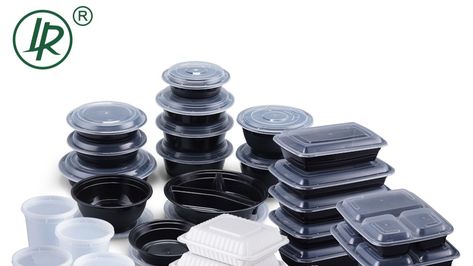
Review the available range of sizes, shapes, capacities, and lids. If your business sells different types of food, a supplier with compatible packaging formats may simplify procurement and inventory management.
Understand Minimum Order Quantities
Wholesale suppliers often establish minimum order quantities based on production efficiency, packaging requirements, or product type.
Make sure the minimum quantity fits your actual consumption and available storage space. Ordering more than you can reasonably use may increase storage costs and create unnecessary inventory.
Examine Production and Supply Capacity
A supplier should be capable of maintaining your required supply volume. This is especially important when containers are essential to everyday operations.
Ask about production capacity, standard lead times, stock availability, and the supplier’s ability to handle recurring orders. Businesses with seasonal demand should also discuss how changes in order volume are managed.
Request a Clear Wholesale Quote
A wholesale quotation should provide enough information to understand the actual cost of purchasing the containers.
In addition to the unit price, check whether the quotation includes or excludes:
- Tooling or mold costs
- Customization charges
- Packaging costs
- Shipping expenses
- Taxes or other applicable charges
- Minimum-order requirements
Comparing complete quotations provides a more accurate picture than comparing unit prices alone.
Review Quality-Control Procedures
Ask how the supplier checks its products before shipment. Quality-control processes may include raw material inspection, dimensional checks, visual inspections, weight measurements, and functional testing.
For containers with separate lids, closure and sealing performance should also be considered. A supplier should have a clear process for identifying and managing defective products.
Verify Food-Contact Documentation
Depending on the destination market and intended application, disposable food containers may need to comply with applicable food-contact requirements.
Ask for relevant documentation before placing a large order. Material declarations, test reports, and other compliance records can help buyers assess whether the products are suitable for their intended market.
Consider Customization Requirements
Some wholesale buyers need standard products, while others require custom packaging for specific dimensions or branding purposes.
If customization is required, ask about available printing, colors, dimensions, shapes, and other options. Also clarify minimum quantities, tooling requirements, sample approval, and production timelines before confirming the order.
Assess Packaging and Shipping
The way containers are packed can affect both product condition and transportation costs. Lightweight products should be protected against crushing, contamination, and deformation during transit.
Ask how products are packed, how many units are included per carton, and how shipments are arranged. This information can also help you calculate warehouse requirements.
Consider Warehouse and Inventory Needs
Wholesale purchasing can reduce the frequency of orders, but larger shipments require adequate storage space.
Consider how many containers your business uses each month and how much inventory you can comfortably store. A purchasing schedule based on actual consumption can help balance bulk-order savings with storage costs.
Look at Communication and Support
Clear communication is an important part of a long-term supplier relationship. The supplier should be able to provide accurate information about specifications, availability, production schedules, and shipping.
Pay attention to how inquiries are handled before placing your first order. Prompt and precise communication can make it easier to manage future orders and resolve unexpected issues.
Review Delivery Reliability
Packaging shortages can disrupt food preparation and order fulfillment. For this reason, delivery reliability should be part of the supplier evaluation process.
Ask about normal lead times and how the supplier manages delays or changes in demand. If your business depends on regular shipments, consider discussing a recurring ordering or forecasting system.
Think About Long-Term Value
The right wholesale supplier should provide value beyond a low purchase price. Consistent quality, dependable delivery, appropriate documentation, and responsive communication can all contribute to lower operational risk.
Evaluate suppliers based on the complete purchasing experience rather than one quotation or one shipment. A supplier that consistently meets your requirements can make procurement easier over time.
Questions to Ask Before Placing an Order
Before confirming a wholesale purchase, ask the supplier:
- What materials are used in the containers?
- What sizes and lid options are available?
- Can samples be provided?
- What is the minimum order quantity?
- What are the standard production lead times?
- What quality-control procedures are followed?
- What food-contact documentation is available?
- Can products be customized?
- How are containers packaged for shipping?
- What is included in the wholesale price?
- How are repeat orders managed?
- What happens if products arrive damaged or do not meet specifications?
Conclusion
Choosing a reliable wholesale disposable food container supplier requires careful consideration of product quality, materials, pricing, order quantities, production capacity, compliance, logistics, and customer support.
By defining your requirements in advance, requesting samples, reviewing documentation, comparing complete quotations, and assessing the supplier’s ability to provide consistent products, you can build a more dependable packaging procurement process.