Introduction
Bearing technology continues to evolve as industries demand machinery that offers greater efficiency, durability, and environmental sustainability. Traditional oil- and grease-lubricated bearings remain widely used, but their dependence on petroleum-based lubricants can create maintenance challenges and environmental concerns. As a result, water-lubricated bearing technology is receiving increasing attention across marine, industrial, and water management applications.
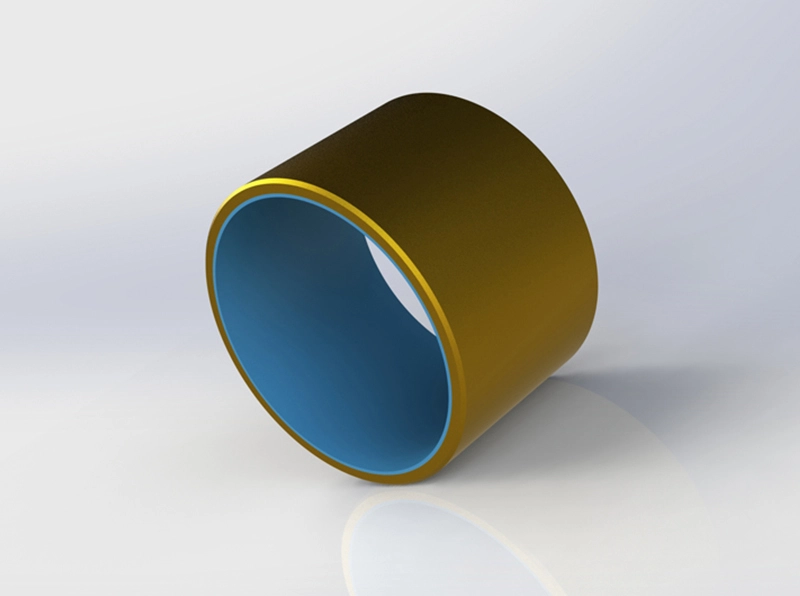
A water lubricated bearing uses water as its primary lubrication medium to reduce friction between moving surfaces. Advances in material science, manufacturing processes, surface engineering, and monitoring technologies are creating new opportunities to improve bearing performance. These developments are helping manufacturers design more reliable systems for demanding operating environments while supporting environmentally responsible industrial practices.
1. Development of Advanced Bearing Materials
Material innovation is one of the most important developments in water-lubricated bearing technology. Traditional rubber materials continue to play an important role, but manufacturers are increasingly exploring advanced polymers and engineered composites.
Modern engineering plastics can offer low friction, abrasion resistance, and dimensional stability. Specialized polymer composites can also combine different material properties to improve mechanical strength and resistance to continuous water exposure.
These developments allow manufacturers to create bearing materials suited to different applications, including marine propulsion, industrial pumping, and hydropower equipment. Future research is likely to focus on materials that provide longer service life while maintaining reliable performance under changing temperatures and mechanical loads.
2. Improved Composite Material Technology
Composite materials are becoming increasingly important in modern bearing manufacturing. By combining polymers with reinforcing fibers, fillers, or specialized additives, manufacturers can develop materials with improved mechanical properties.
These composites can be designed to provide better wear resistance, stiffness, and dimensional stability than certain conventional materials.
Advanced composite formulations may also help bearings withstand demanding operating environments where abrasive particles, continuous loads, and varying water conditions are present.
As manufacturing technologies improve, more application-specific composite solutions are expected to become available.
3. Advanced Surface Engineering
Surface engineering is another area contributing to bearing performance improvements. The condition of the bearing surface directly affects friction, lubrication, and material wear.
Modern manufacturing techniques allow manufacturers to improve surface smoothness, dimensional accuracy, and contact characteristics. Some designs also incorporate grooves or specialized surface geometries to support water circulation.
Better surface engineering can help maintain more consistent lubrication conditions and reduce localized wear. Future developments may focus on optimizing surface structures for specific shaft speeds, loads, and water flow conditions.
4. Precision Manufacturing Technologies
Manufacturing accuracy is essential for producing reliable bearing components. Incorrect dimensions, uneven surfaces, and inconsistent material properties can negatively affect performance.
Computer-controlled machining, advanced molding processes, and automated production systems are helping manufacturers achieve greater dimensional consistency.
These technologies can improve production repeatability while reducing manufacturing defects. Precision manufacturing also allows companies to develop customized bearing dimensions for specialized industrial equipment.
As production technologies advance, manufacturers will have more opportunities to create application-specific designs with improved quality control.
5. Smart Monitoring and Predictive Maintenance
Digital monitoring technologies are changing how industrial machinery is maintained. Sensors can be used to monitor important operating conditions, including temperature, vibration, shaft movement, and water flow.
By collecting and analyzing this information, operators can identify unusual performance changes before they develop into major mechanical problems.
Predictive maintenance systems may help detect insufficient water circulation, abnormal vibration, or developing bearing wear. Instead of relying only on fixed inspection schedules, businesses can use operating data to plan maintenance more effectively.
The integration of sensors and industrial monitoring platforms is expected to become increasingly important in advanced bearing applications.
6. Environmentally Responsible Manufacturing
Environmental sustainability is influencing the development of modern industrial components. Water-lubricated bearings already offer an important advantage by reducing dependence on conventional oil and grease in suitable applications.
Manufacturers are also exploring ways to make production processes more resource-efficient. These efforts include reducing manufacturing waste, improving material utilization, and evaluating recyclable or longer-lasting materials.
Future product development may place greater emphasis on lifecycle performance, responsible material sourcing, and reduced environmental impact throughout manufacturing and equipment operation.
7. Greater Adoption in Marine Industries
Marine applications are expected to remain an important market for water-lubricated bearing technology. Ship propulsion systems require dependable shaft support while operating in direct contact with seawater.
Reducing oil leakage risks is particularly important for protecting marine ecosystems. Improved bearing materials and manufacturing methods can help address the demanding conditions associated with marine equipment.
Future designs may focus on improved abrasion resistance, longer service intervals, and better performance under changing loads and water conditions.
8. Customization for Specialized Industrial Applications
Industrial machinery does not operate under identical conditions. Different applications require specific bearing dimensions, material properties, load capacities, and lubrication arrangements.
Manufacturers are increasingly focusing on customized solutions that match individual equipment requirements.
This approach can improve compatibility with existing machinery and help address challenges associated with specialized operating environments. Businesses researching industrial bearing technologies can explore the technical resources available from Techemer to better understand engineering solutions and application requirements.
9. Integration with Energy-Efficient Machinery
Energy efficiency is another important consideration for future bearing development. Friction within mechanical systems can contribute to energy losses, making bearing performance an important part of overall equipment efficiency.
Improvements in material selection, surface design, and lubrication management can help reduce unnecessary friction under suitable operating conditions.
Future bearing systems may increasingly be developed alongside energy-efficient motors, pumps, and industrial equipment to support improved overall performance.
Conclusion
Water-lubricated bearing technology is advancing through innovations in composite materials, surface engineering, precision manufacturing, and intelligent monitoring systems. These developments are creating opportunities for more durable, efficient, and environmentally responsible bearing solutions.
As marine and industrial sectors continue to prioritize operational reliability and sustainability, demand for improved water-lubricated bearing designs is likely to grow. Continued research and manufacturing innovation will play an important role in shaping the future of this technology and expanding its applications across modern machinery.