OEM and custom printing projects often involve requirements that go beyond the specifications of a standard printer. A printer may need to fit into a particular enclosure, communicate with proprietary equipment, support a specific paper format, or operate under unusual environmental conditions. These requirements make customization an important consideration for companies developing integrated products.
A Panel Printer Manufacturer can support OEM projects by adapting mechanical, electronic, firmware, and production elements to suit the customer’s equipment. The process generally begins with a detailed review of requirements and continues through design, prototyping, testing, and manufacturing.
Starting With a Detailed Requirement Review
Before making design changes, manufacturers typically need to understand exactly how the printer will be used. A detailed specification provides a foundation for evaluating whether an existing model can meet the application requirements or whether modifications are necessary.
Typical information may include:
- Installation dimensions
- Available mounting space
- Paper width and roll diameter
- Required printing speed
- Print resolution
- Communication interfaces
- Input voltage
- Operating temperature
- Expected print volume
- Cutter requirements
- User-access requirements
Clear specifications can reduce misunderstandings during later stages of development.
Determining the Level of Customization
Not every OEM project requires a completely new printer. In some cases, a standard mechanism can satisfy most of the requirements with a few modifications.
Manufacturers may classify a project according to the amount of customization required. This can range from simple configuration changes to significant mechanical or electronic redesign.
Standard Product With Configuration Changes
Some applications only require changes to firmware settings, communication parameters, connectors, or other configurable features.
This approach can reduce development time because the underlying printer design remains largely unchanged.
Modified Hardware
A project may require different mounting points, housing dimensions, paper capacity, connectors, or other hardware changes.
These modifications require engineering review to ensure that the changes do not negatively affect printing performance or reliability.
Custom Development
More specialized applications may require a printer designed around unique mechanical or electronic requirements. Such projects generally involve additional design, prototyping, and validation work.
Adapting Mechanical Design
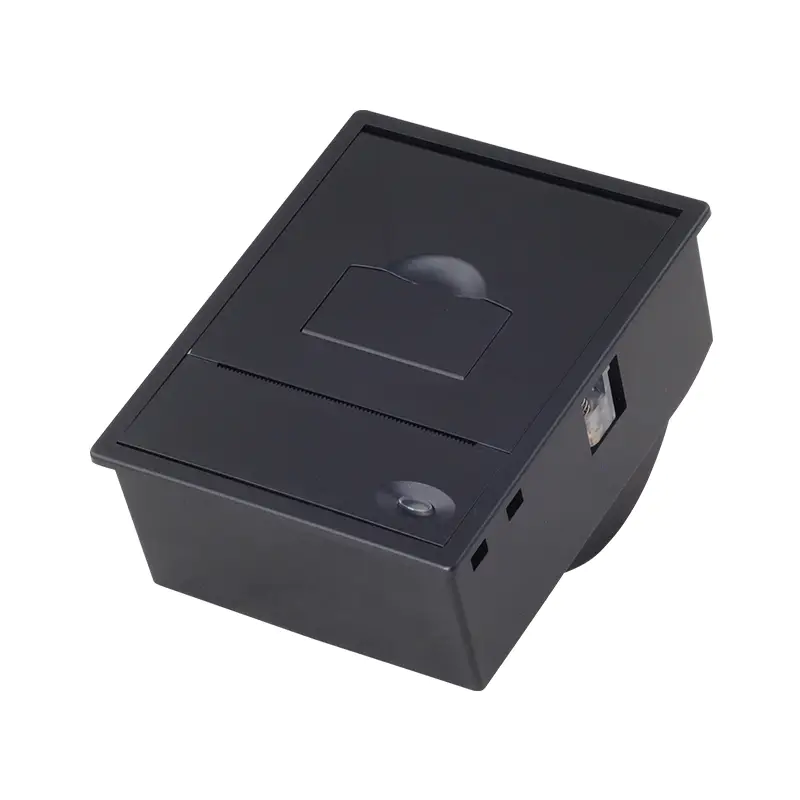
Mechanical integration is one of the most common considerations in OEM printer projects. The available installation area may have dimensions that differ from those of a standard printer.
Engineers can evaluate the enclosure, mounting structure, paper path, access points, and position of external controls. The objective is to create a design that fits into the customer’s equipment without compromising essential printer functions.
Mechanical customization may involve:
- Custom mounting brackets
- Modified housing dimensions
- Different paper-door configurations
- Connector repositioning
- Changes to paper-roll capacity
- Customized front-panel arrangements
Each modification needs to be evaluated for manufacturability and long-term reliability.
Customizing the Electronic Interface
OEM equipment can use different electrical architectures, so interface compatibility may need to be addressed during development.
A customer may require a specific communication interface, connector type, power input, or signal configuration. Engineers can review these requirements and determine how they can be incorporated into the printer’s electronics.
Electrical customization should also consider voltage tolerance, power consumption, grounding, and compatibility with the host equipment.
Firmware and Command Requirements
Hardware integration is only part of an OEM project. The printer also needs to communicate correctly with the software controlling it.
Some customers may use established printer commands, while others may require specific command behavior or configuration options. Firmware can sometimes be adapted to support application-specific requirements.
For example, customization may involve:
- Communication settings
- Printing commands
- Error reporting
- Paper-status detection
- Cutter control
- Character or language support
- Startup behavior
Software requirements should be defined early because firmware changes can influence the testing process.
Matching Paper and Printing Requirements
Different products use different paper sizes and formats. A ticketing machine, measuring instrument, medical device, and industrial controller may all require different types of printed information.
OEM development can therefore involve selecting a suitable print width, paper roll size, paper thickness, and printing speed.
Manufacturers may also need to evaluate whether the selected print mechanism can support the expected workload. Matching the mechanism to the application’s actual requirements can help avoid performance problems later.
Developing Prototypes for Evaluation
Prototypes provide an important bridge between specifications and production. Instead of immediately manufacturing large quantities, manufacturers can create sample units for technical evaluation.
The customer can install the prototype in the target equipment and assess factors such as:
- Physical fit
- Paper loading
- Cable routing
- Printing performance
- Communication
- User access
- Heat generation
- Maintenance requirements
Feedback from this stage can be used to refine the design before production tooling or larger manufacturing commitments are made.
Testing Customized Designs
A customized printer should be tested as a complete system rather than relying solely on individual component checks.
Functional testing may verify printing, paper feeding, communication, sensors, and other core operations. Mechanical testing can examine covers, mounting structures, and moving parts.
For demanding applications, additional testing may evaluate repeated print cycles, environmental conditions, vibration, or other factors relevant to the equipment.
Managing Design Changes
OEM projects can involve multiple rounds of revisions. A customer may discover during testing that a connector needs to move, an opening needs to be enlarged, or a software function needs to behave differently.
Effective change management helps prevent confusion between different design versions.
Manufacturers may maintain engineering drawings, component lists, firmware versions, and testing records so that everyone involved is working with the correct specification.
Considering Production Requirements Early
A design may perform well in a prototype but still require changes before mass production. OEM manufacturers need to consider how the customized printer will be assembled consistently at larger volumes.
Production planning may involve:
- Component sourcing
- Assembly procedures
- Quality inspections
- Testing equipment
- Production tooling
- Packaging
- Batch traceability
Considering these factors during development can help reduce production complications later.
Handling OEM Branding
Some OEM projects require the printer to become part of the customer’s product identity. Depending on the project, branding requirements may involve external labels, housing markings, packaging, documentation, or other identification elements.
Branding changes should be coordinated with mechanical design and production processes so that they remain consistent with the final product configuration.
Protecting Product Consistency
Once a customized printer enters production, consistency becomes particularly important. The manufacturer needs to ensure that later batches continue to meet the approved specifications.
Quality procedures can include incoming component checks, assembly inspections, functional testing, and final verification.
Maintaining approved documentation and production records can help identify deviations and support consistent manufacturing.
Supporting Different Production Volumes
OEM customers can have very different production requirements. One project may involve small batches for specialized equipment, while another may require larger quantities for products manufactured continuously.
Manufacturing processes may therefore need to accommodate different order volumes while maintaining the same technical specifications.
Production planning should also consider component availability and expected demand to reduce the risk of supply interruptions.
Providing Technical Documentation
Documentation is an important part of OEM cooperation. Customers integrating a printer into their own equipment may need technical information for hardware and software development.
Relevant documentation can include:
- Mechanical drawings
- Mounting dimensions
- Electrical specifications
- Interface information
- Communication commands
- Paper specifications
- Operating instructions
- Maintenance procedures
- Testing requirements
Accurate documentation can make system integration easier and reduce unnecessary development work.
Addressing Maintenance and Service Requirements
Custom equipment may remain in operation for years, so maintenance should be considered during development rather than after deployment.
Designers can evaluate how easily operators can replace paper, access service components, clear paper jams, and perform routine inspections.
For high-volume or mission-critical equipment, serviceability can be as important as the printer’s initial installation.
Communication Between Customer and Manufacturer
Successful OEM projects usually depend on clear communication throughout development. Requirements can change as the host machine evolves, and technical questions may arise during testing.
Regular communication between engineering, purchasing, production, and the customer helps keep the project aligned with the approved specifications.
A clearly defined approval process can also reduce the possibility of manufacturing an incorrect revision.
Evaluating an OEM Printing Partner
Companies considering a customized printer can evaluate potential manufacturers by looking beyond the basic product specifications.
Useful areas to review include:
- Engineering and customization capabilities
- Prototype development processes
- Mechanical and electronic design support
- Firmware customization
- Testing procedures
- Production capacity
- Quality-control systems
- Documentation practices
- Component sourcing
- Long-term technical support
These factors can provide a broader picture of how well a manufacturer may support an OEM project from concept to production.
Conclusion
OEM and custom printer development involves much more than changing the appearance of an existing product. Mechanical integration, electronics, firmware, paper handling, testing, documentation, production, and long-term support may all need to be considered.
A structured approach allows manufacturers and customers to identify requirements early, validate prototypes, manage design changes, and prepare the customized printer for reliable production. For companies building equipment with integrated printing functions, understanding this process can make supplier evaluation and project planning more effective.