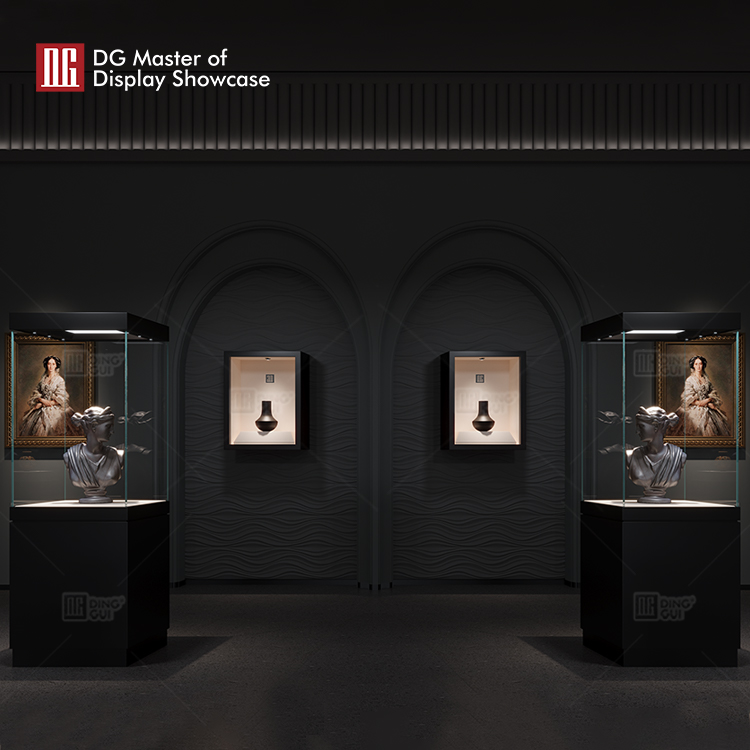
Every museum collection has different presentation and preservation requirements. A delicate manuscript may need controlled lighting and humidity, while a large sculpture may require structural support and unobstructed viewing from several directions.
For this reason, effective Museum Showcase Design should be adapted to the exhibit rather than based on a single standard configuration. The artifact’s material, dimensions, viewing requirements, security needs, and conservation conditions all influence the final showcase.
Historical Documents and Manuscripts
Paper-based collections can be particularly sensitive to light, humidity, handling, and pollutants. Their showcases often need to provide a stable enclosed environment with carefully managed illumination.
Flat or angled cases can allow visitors to view documents comfortably while keeping them securely positioned. Low-light solutions and appropriate glazing may also be considered according to conservation requirements.
Paintings and Two-Dimensional Artwork
Paintings require careful consideration of viewing height, lighting direction, and physical security. A showcase or enclosed display system should provide sufficient protection without creating distracting reflections across the artwork.
For framed pieces, the internal configuration should accommodate the artwork’s dimensions while maintaining appropriate spacing from the glazing.
Textiles and Costumes
Textiles, garments, and other fabric-based artifacts can require specialized support because prolonged stress or unsuitable positioning may affect their condition.
Display cases for these collections may incorporate custom forms, padded supports, mounts, or mannequins designed around the specific object. Lighting should also be carefully managed when materials are light-sensitive.
Jewelry and Small Valuable Objects
Small artifacts can require showcases that bring the visitor’s attention close to the object while maintaining strong security. Compact cases can provide controlled viewing angles and carefully positioned illumination.
Internal mounts should hold each item securely and prevent unnecessary movement. Locking mechanisms and secure glazing can provide additional protection for valuable collections.
Ceramics and Glass Objects
Ceramics, glassware, and similar objects may have delicate surfaces or irregular shapes. Their displays need stable platforms or mounts that reduce the possibility of movement.
Clear glazing can provide visibility from multiple angles, while carefully planned lighting can highlight shape, surface details, and craftsmanship without producing excessive glare.
Sculptures and Three-Dimensional Objects
Large sculptures often benefit from viewing from several directions. A fully enclosed case may not always be practical, so the display strategy needs to reflect the object’s size and conservation requirements.
Where an enclosure is used, its structural capacity, glazing configuration, internal supports, and visitor circulation should all be considered together.
Archaeological Artifacts
Archaeological collections can range from small fragments to large objects made from stone, metal, ceramic, wood, or other materials. Their showcase requirements therefore vary considerably.
The display may need to accommodate environmental control, dust reduction, secure mounting, and carefully selected interior materials. The enclosure should be designed around the condition and material composition of each artifact.
Fossils and Geological Specimens
Fossils, minerals, and geological specimens can be heavy, irregularly shaped, or difficult to position. Their cases need appropriate load-bearing structures and stable display platforms.
Lighting can be used to emphasize textures, layers, crystal structures, or other features while ensuring that the artifact remains securely positioned.
Scientific Instruments
Historical scientific instruments often contain intricate mechanisms and fine details. Visitors may need to see the object from several angles to understand how it was constructed or used.
Transparent enclosures with suitable lighting and carefully planned internal supports can make complex features easier to observe while protecting delicate components.
Photographs and Prints
Photographs and prints may be affected by light exposure, humidity, and environmental pollutants. Their display cases should therefore be designed around the conservation requirements of the particular photographic or printing process.
Flat presentation, suitable glazing, controlled illumination, and stable environmental conditions can all play important roles.
Natural History Specimens
Natural history collections can include taxidermy, shells, bones, insects, botanical specimens, and other materials. Each category can present different challenges.
Large specimens may require substantial internal support, while smaller pieces may benefit from compact compartments or specialized mounts. Environmental conditions should be established according to the materials involved.
Interactive or Educational Exhibits
Some museum displays are designed for closer visitor engagement. In these cases, the showcase must balance accessibility with protection.
Durable construction, secure interactive components, clear viewing areas, and easily maintained surfaces can help support frequent visitor interaction without compromising the surrounding collection.
Mixed-Object Exhibits
Some exhibitions combine objects made from several different materials. A single case may contain documents, tools, textiles, photographs, or decorative objects within the same narrative.
In these situations, designers need to consider the requirements of each object and identify environmental or presentation conditions that are appropriate for the complete group.
Consider Scale and Proportion
The physical scale of an artifact should influence the size and configuration of its showcase. Small objects may need carefully controlled backgrounds and focused lighting, while large objects require greater structural capacity and viewing distance.
Proper proportions can also prevent the enclosure from overpowering the exhibit or leaving an object visually lost within a large case.
Plan Lighting Around the Exhibit
Lighting should serve the object rather than simply illuminate the entire case. The ideal arrangement depends on the object’s color, surface, shape, material, and sensitivity.
Adjustable fixtures can provide flexibility, while glare-reduction strategies can improve visibility through the glazing.
Account for Mounting Requirements
Each exhibit should have a stable method of support. Mounting solutions may range from simple platforms to highly customized supports.
The mount should hold the object securely while avoiding unnecessary pressure or contact with vulnerable surfaces. For fragile pieces, conservation specialists should be involved in determining the appropriate support method.
Match Security to the Collection
Security requirements vary according to the value, fragility, location, and accessibility of an exhibit. Locks, reinforced glazing, concealed hardware, secure mounting, and monitoring systems can be incorporated where appropriate.
The security strategy should also allow authorized museum personnel to access the artifact when required.
Think About Future Exhibition Changes
A showcase may remain in service through several exhibition cycles. Flexible shelves, adjustable mounts, removable components, and adaptable lighting can make it easier to accommodate different objects later.
Planning for future use can also reduce the need for major modifications when collections change.
Coordinate With Conservation and Exhibition Teams
Showcase planning works best when conservation requirements and visitor experience are considered together. Curators can explain the significance and presentation goals of an artifact, while conservators can identify environmental and handling concerns.
Exhibition designers and manufacturers can then translate these requirements into a practical enclosure that works within the available gallery space.
Selecting a Suitable Manufacturer
The manufacturer’s ability to customize construction is particularly important when exhibits vary significantly in size, material, or conservation requirements. Before selecting a supplier, museums can review technical capabilities, previous project experience, material options, installation support, and maintenance provisions.
DG Display Showcase can be assessed alongside other suppliers according to how effectively its capabilities match the specific requirements of the intended exhibits.
Final Thoughts
Different exhibit types call for different approaches to showcase planning. Documents, textiles, sculptures, archaeological objects, scientific instruments, jewelry, and natural history specimens each present their own requirements for visibility, support, environmental protection, and security.
By starting with the characteristics of the collection and developing the enclosure around those needs, museums can create displays that provide a clear visitor experience while supporting the long-term care of their artifacts.