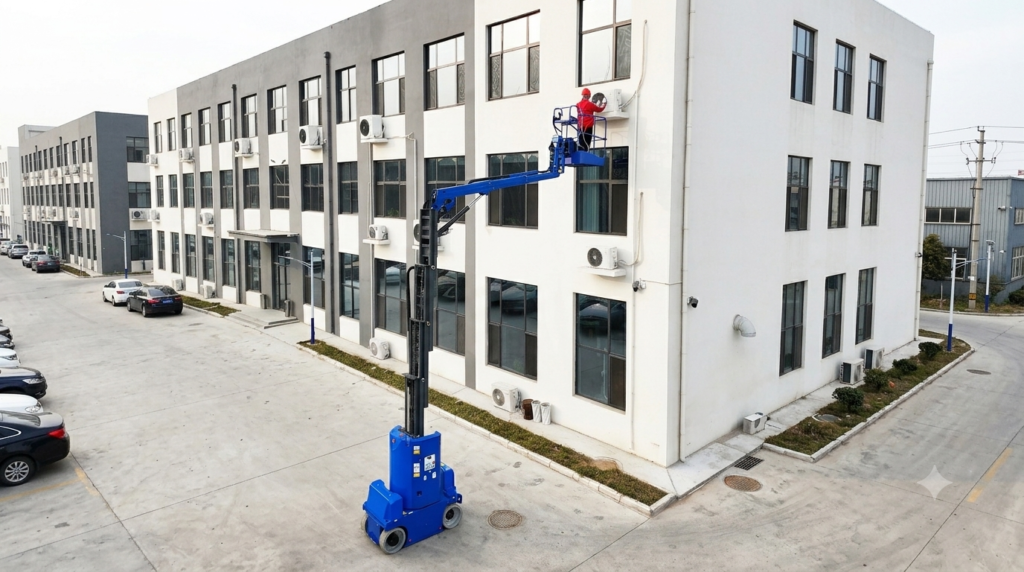
Buying equipment for working at height is rarely an impulse decision. It affects employee safety, project efficiency, maintenance budgets, and even customer satisfaction. Whether you’re expanding a rental fleet or purchasing machines for in-house operations, choosing the right equipment requires careful planning rather than simply comparing prices.
Finding a dependable aerial work platforms manufacturer is one of the most important parts of that decision. The right manufacturer combines reliable engineering, strict quality control, dependable after-sales service, and equipment that performs consistently in demanding environments. Instead of focusing only on the machine itself, experienced buyers evaluate the company responsible for designing, building, and supporting it throughout its service life.
Why Demand for Access Platforms Continues to Rise
Construction projects are becoming more complex, warehouses are growing larger, and industrial facilities operate around the clock. These changes have increased the need for safe and efficient ways to reach elevated work areas.
Compared with traditional ladders or scaffolding, aerial work platforms offer greater stability, improved mobility, and better productivity. Workers can safely access difficult locations while carrying tools and replacement parts without repeatedly climbing up and down.
Today, these machines support operations in a wide range of industries, including:
- Commercial construction
- Manufacturing
- Logistics and warehousing
- Airport maintenance
- Utility services
- Telecommunications
- Property management
- Shopping malls
- Renewable energy projects
- Municipal infrastructure
As workplace safety standards continue to improve worldwide, businesses increasingly view access equipment as a long-term investment rather than a short-term expense.
Choosing the Right Type of Equipment
Not every job requires the same lifting solution. Selecting equipment based on actual working conditions helps improve efficiency while reducing unnecessary operating costs.
Scissor Lifts
Scissor lifts move vertically and provide a spacious platform for workers, equipment, and materials.
They are commonly used for:
- Ceiling installations
- Electrical maintenance
- Indoor construction
- Warehouse operations
- Painting projects
- HVAC servicing
Electric models are particularly useful indoors because they operate quietly and produce no exhaust emissions.
Boom Lifts
Boom lifts allow operators to reach both upward and outward, making them suitable for locations where direct vertical access is impossible.
These machines are often used for:
- Exterior building maintenance
- Bridge inspections
- Steel erection
- Utility repairs
- Industrial maintenance
Articulating boom lifts can reach around obstacles, making them valuable on complex worksites.
Vertical Mast Lifts
Vertical mast lifts are designed for compact indoor environments where maneuverability is essential.
Their narrow design makes them suitable for:
- Hotels
- Hospitals
- Schools
- Retail stores
- Office buildings
- Libraries
These machines are especially useful in areas where larger equipment cannot operate efficiently.
What Makes a Manufacturer Reliable?
A machine’s appearance tells only part of the story. The engineering, materials, and manufacturing processes behind it have a greater influence on long-term performance.
Reliable manufacturers usually focus on:
- Precision engineering
- Durable construction
- Consistent production standards
- Product testing
- Operator safety
- Long-term customer support
These factors help reduce equipment downtime while improving overall productivity.
Engineering Quality Matters
Well-designed access equipment performs more smoothly throughout its operating life.
Strong engineering often results in:
- Stable lifting performance
- Balanced weight distribution
- Smooth hydraulic operation
- Responsive controls
- Comfortable operator experience
These improvements reduce unnecessary wear while making daily operation easier for workers.